








 Ngorongoro Conservation Area
 Volcanoes National Park










Mauritian Tomb Bat
Taphozous mauritianus
Mauritian Tomb Bat — Quick Facts
Important notice
This profile describes a species associated with the Mount Kilimanjaro ecological landscape. Checklist or locality records do not confirm a sighting on every route, camp or altitude. Route records are listed only when verified; none are asserted here.
Introduction
The Mauritian tomb bat is a small insect-eating bat belonging to the sac-winged bats. The historical Kilimanjaro mammal review by Grimshaw, Cordeiro and Foley (1995) records this species at Moshi, citing Kock (1969). That record supports its place in the wider Kilimanjaro-area mammal checklist. It does not establish a population through the mountain's forest, heath, moorland or alpine zones, and it does not confirm the species on any climbing route.
How to Identify the Animal
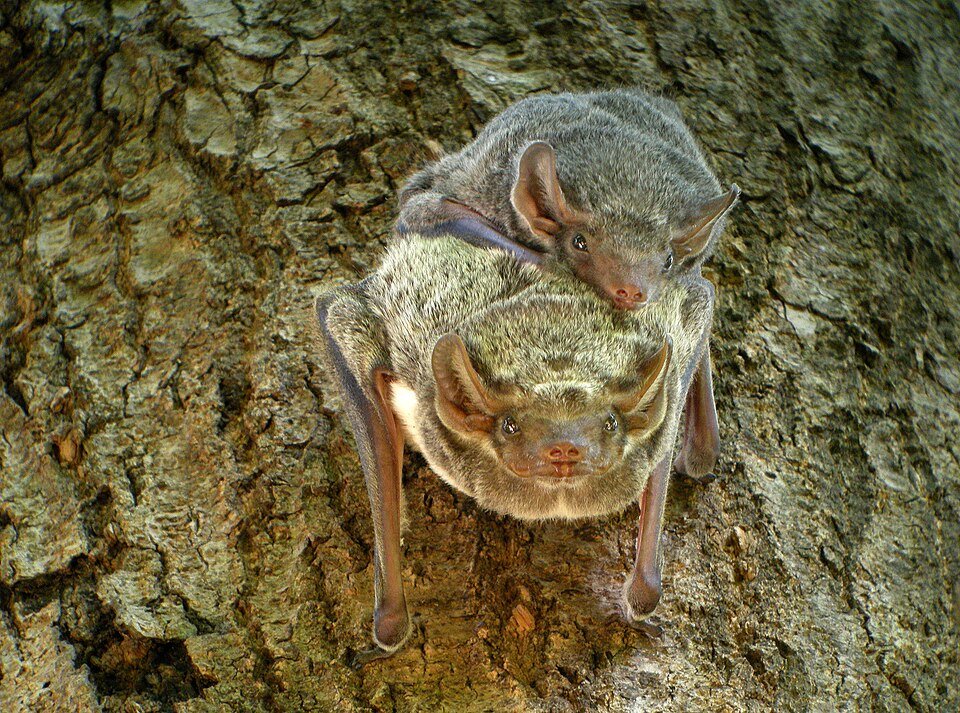
A relatively slender bat with dark grey to brownish-grey fur and a paler, whitish underside. Its wings are long and narrow, and the family name refers to small sac-like structures in the wing membrane. The species is adapted for fast, agile flight over open country and around structures where insects gather. Field identification of bats is difficult, especially where several species occur in the same area, and photographs alone are rarely enough for a certain identification.
Habitat and Distribution on Mount Kilimanjaro
The specific historical locality documented for this species around Kilimanjaro is Moshi, as reported in the 1995 mammal review. The wider African distribution includes woodland, savanna, cliffs and settled areas where roosting sites and flying insects are available. That broader ecology must be kept separate from the single local record: Moshi supports inclusion in the wider Kilimanjaro-area checklist, but it is not evidence of occurrence on the montane forest, moorland, alpine desert or any particular climbing route.
Diet and Feeding Behaviour
Insectivorous, capturing flying insects on the wing during nocturnal foraging. No locally documented prey list is claimed for Kilimanjaro.
Behaviour and Social Life
Primarily nocturnal, emerging after dusk to forage and returning to sheltered roosts during the day. Flight is usually quick and direct as the bat searches for insects. Social behaviour outside the roost is not well documented here, and all natural-history statements are presented as general species information rather than Kilimanjaro observations.
Roosting and Shelter
Sac-winged bats typically roost in sheltered positions on walls, rocks, under eaves or in similar structures, sometimes in small groups and often in partly exposed positions. This is general family-level ecology. No particular Moshi building, cave or roost site is claimed here because the historical source does not identify one.
Communication and Calls
Like other bats, this species uses ultrasonic calls for orientation and for detecting insect prey, along with social calls near roosts. No Kilimanjaro-specific vocal study is claimed.
Reproduction and Breeding
General bat biology indicates slow reproduction, usually with a single young and extended parental care. No breeding season, maternity colony or breeding site is claimed for the Kilimanjaro area.
Ecological Importance
As a nocturnal insect predator, the Mauritian tomb bat contributes to natural insect regulation and forms part of the food web for predators such as birds of prey and snakes. No quantified local ecological role is asserted.
Conservation Status
The global IUCN assessment for Taphozous mauritianus is Least Concern. This is a global category, not a Kilimanjaro population estimate, local abundance rating or mountain-specific conservation assessment.
Wildlife Watching on Kilimanjaro
Bats are more likely to be encountered around suitable lowland habitats and roosting environments than during ordinary daytime mountain walks. The Moshi record is historical and does not promise a current sighting. Visitors must not handle bats, enter or disturb potential roosts, or attempt to capture them.
Route and Habitat Occurrence
Documented locality: Moshi, according to the historical Kilimanjaro mammal review. No occurrence is claimed on Machame, Marangu, Lemosho, Shira, Rongai, Northern Circuit, Umbwe, Mweka or Kilema without independent route-specific evidence.
Honest Expectations
This species is not a guaranteed wildlife sighting. Its historical Moshi record should not be treated as proof of current abundance or regular encounters anywhere on the mountain.
Frequently Asked Questions
About Mauritian Tomb Bat on Kilimanjaro
What is a Mauritian tomb bat?
A small insect-eating bat in the sac-winged bat family.
What is its scientific name?
Taphozous mauritianus.
Which mammal family does it belong to?
Emballonuridae, the sac-winged or tomb bats.
Why is it called a sac-winged bat?
Members of this family have small sac-like structures in the wing membrane.
Has it been recorded around Mount Kilimanjaro?
Yes, in the historical Kilimanjaro mammal review.
Where was it historically recorded?
The review cites a record from Moshi, referring to Kock (1969).
Was it recorded in Moshi?
Yes. Moshi is the specific locality mentioned in that account.
Does it live in Kilimanjaro montane forest?
No montane forest occurrence is established by the Moshi record.
Can climbers expect to see it?
No. It is nocturnal and the local record is historical.
Is it active during the day or at night?
Primarily at night, foraging after dusk.
What does it eat?
Flying insects captured on the wing.
Where do Mauritian tomb bats roost?
Sheltered positions on walls, rocks or structures; no particular Moshi roost is claimed here.
How does it find its food?
By using ultrasonic calls to locate and track insects in flight.
How does it reproduce?
General bat biology suggests slow reproduction and usually one young; no local breeding data are claimed.
Is it dangerous to people?
It is not aggressive, but bats can bite if handled and must be left alone.
Should visitors touch bats?
No. Never handle, capture or disturb them.
What role does it play in the ecosystem?
It consumes insects and forms prey for some predators.
What is its conservation status?
Least Concern globally according to IUCN.
Is it confirmed on all Kilimanjaro routes?
No. No route-specific record is claimed.
Why are bats important to Kilimanjaro wildlife diversity?
They add a nocturnal insect-eating mammal group to the wider ecosystem.


Sources and Further Reading
Research foundations
Grimshaw, J.M., Cordeiro, N.J. & Foley, C.A.H. (1995). The Mammals of Kilimanjaro. African Journal of Ecology.
Elevational Distribution and Ecology of Small Mammals on Africa's Highest Mountain (2014 field study).
Tanzania National Parks — Kilimanjaro National Park official information.
UNEP-WCMC — Kilimanjaro World Heritage Datasheet.
Discover Kilimanjaro’s Wildlife
Explore the mountain responsibly with African Majestic Adventure and learn about its animals with local guides.