








 Ngorongoro Conservation Area
 Volcanoes National Park










Plains Zebra
Equus quagga
Plains Zebra — Quick Facts
Important notice
This profile describes a species associated with the Mount Kilimanjaro ecological landscape. Checklist or locality records do not confirm a sighting on every route, camp or altitude. Route records are listed only when verified; none are asserted here.
Introduction
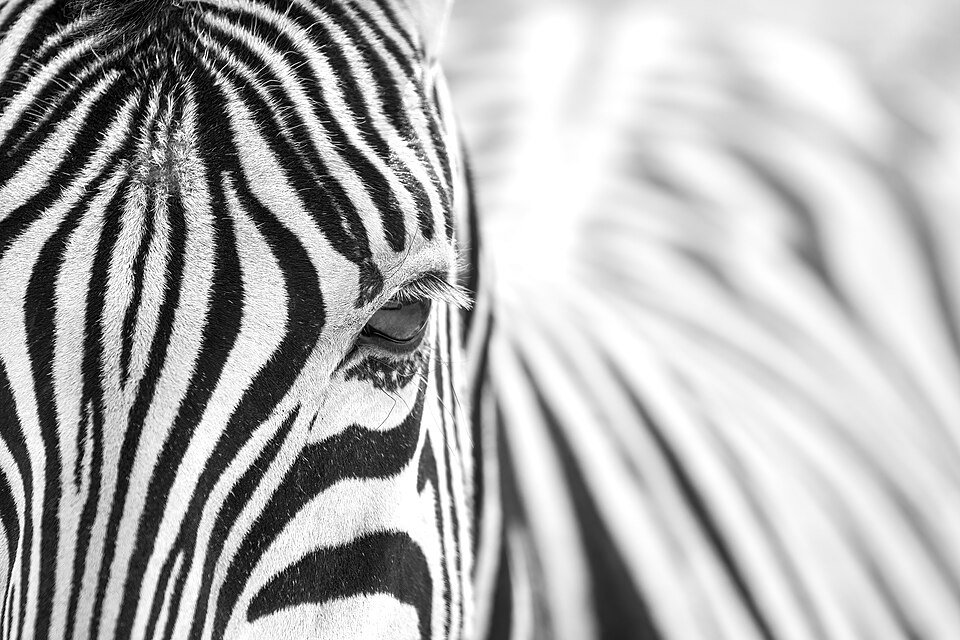
The plains zebra is a large grazing mammal with a bold black-and-white striped coat. It belongs to the horse family and is associated with open grassland, savanna and bushland. The 1995 Kilimanjaro mammal review records it in bushland below the forest and sometimes on West Kilimanjaro farms, placing it firmly in the lower landscapes of the mountain rather than the high-altitude climbing environment.
How to Identify the Animal
A robust horse-like mammal with a black-and-white striped coat, a sturdy body, long legs, an upright mane and large ears. Stripe patterns differ between individuals, so they cannot be used alone to identify a particular subspecies. The species discussed here is the plains zebra, Equus quagga, not the mountain zebra or Grevy's zebra.
Habitat and Distribution on Mount Kilimanjaro
The 1995 Kilimanjaro mammal review records this species under the older name Equus burchelli, commonly called Burchell's zebra, a historical name associated with the plains zebra now generally treated as Equus quagga. The review states that it occurs in bushland below the forest and is sometimes seen on West Kilimanjaro farms. These records concern the lower open landscapes around the mountain, not the montane forest or upper climbing zones. A separate, unconfirmed report of zebra and kongoni on the Saddle at about 4,400 metres was communicated in 1990 by a witness who believed she had seen them in 1926. The authors found no confirmation in contemporary literature, so this is treated only as an unconfirmed historical report and never as evidence that plains zebras inhabit the alpine zone or summit approaches.
Diet and Feeding Behaviour
Herbivorous, feeding primarily on grasses. Grazing shapes how the species uses open landscapes, with diet and feeding areas shifting as vegetation availability changes. No Kilimanjaro-specific food-plant list is claimed.
Behaviour and Social Life
Plains zebras live in family groups and sometimes larger aggregations. Herds show coordinated movement and vigilance against predators, with strong bonds between mares and foals and social interactions among group members. Communication uses calls, facial expressions and body posture. No local herd sizes are invented here.
Movement and Seasonal Ecology
Zebras move through open landscapes in response to forage and water availability. Seasonal movement is reported across parts of their wide African range, but no particular migration route through Kilimanjaro is claimed without independent documentation.
Communication and Calls
Brays, grunts and snorts, together with ear, head and tail positions, help individuals maintain contact and signal alertness within a group. No Kilimanjaro-specific vocal study is claimed.
Reproduction and Breeding
General species biology includes a long gestation of approximately one year, usually a single foal, maternal care and integration of young into family groups. No Kilimanjaro-specific breeding season is asserted.
Ecological Importance
As large grazers, plains zebras influence grassland vegetation structure, contribute to nutrient cycling and form prey for large predators. No quantified local ecological effect is claimed.
Conservation Status
The current global IUCN assessment for Equus quagga is Near Threatened, with a decreasing population trend noted across its range; some regional assessments list it as Least Concern. These are global or regional categories, not a statement that the species is locally endangered on Kilimanjaro.
Wildlife Watching on Kilimanjaro
The most relevant habitats are lower open bushland and surrounding farm landscapes rather than the high-altitude trekking environment. A historical record does not guarantee a present-day sighting, and visitors must observe from a safe distance without approaching or feeding zebras.
Route and Habitat Occurrence
Historical Kilimanjaro evidence: bushland below the forest and West Kilimanjaro farms. The Saddle report at about 4,400 metres is explicitly unconfirmed. Plains zebras are not claimed as routinely seen on Machame, Marangu, Lemosho, Shira, Rongai, Northern Circuit, Umbwe, Mweka or Kilema.
Honest Expectations
Visitors should not expect plains zebras during a normal high-altitude Kilimanjaro climb. The documented association is with lower open landscapes, and historical records are not a guarantee of current sightings.
Frequently Asked Questions
About Plains Zebra on Kilimanjaro
What is a plains zebra?
A large African grazing mammal with bold black-and-white stripes.
What is its scientific name?
Equus quagga.
Which family does it belong to?
Equidae, the horse family.
What makes plains zebras different from other zebras?
Their stripe pattern, body proportions and range differ from those of mountain and Grevy’s zebras.
Have plains zebras been recorded around Kilimanjaro?
Yes, in historical accounts from the lower landscape.
Where have they been recorded?
In bushland below the forest and on West Kilimanjaro farms.
Do they occur in West Kilimanjaro?
Yes, the 1995 review mentions sightings on West Kilimanjaro farms.
Do they live in the montane forest?
No. The documented habitat is bushland below the forest.
Can climbers see zebras on Kilimanjaro?
They are not an expected sighting on high-altitude climbing routes.
What do plains zebras eat?
Mainly grasses.
Do zebras live in herds?
Yes, in family groups and sometimes larger aggregations.
How do zebras communicate?
With brays, grunts, snorts and body signals.
How fast can a zebra run?
Plains zebras are fast runners, but no Kilimanjaro-specific measurement is claimed.
How do zebras protect themselves?
Through group vigilance, coordinated movement and defensive kicks.
How long is a zebra pregnancy?
Approximately one year in the wider species.
What is the role of zebras in grassland ecosystems?
Grazing shapes vegetation and zebras form prey for predators.
Are plains zebras endangered?
The global IUCN status is Near Threatened; some regional assessments say Least Concern.
Are zebras found near the Kilimanjaro summit?
No confirmed summit or alpine-zone occurrence is claimed.
Was there a historical report of zebras on the Saddle?
Yes, but the 1995 review treats it as unconfirmed and without contemporary corroboration.
Why should visitors observe zebras from a safe distance?
They are powerful wild animals and can be dangerous if approached.


Sources and Further Reading
Research foundations
Grimshaw, J.M., Cordeiro, N.J. & Foley, C.A.H. (1995). The Mammals of Kilimanjaro. African Journal of Ecology.
Elevational Distribution and Ecology of Small Mammals on Africa's Highest Mountain (2014 field study).
Tanzania National Parks — Kilimanjaro National Park official information.
UNEP-WCMC — Kilimanjaro World Heritage Datasheet.
Discover Kilimanjaro’s Wildlife
Explore the mountain responsibly with African Majestic Adventure and learn about its animals with local guides.