








 Ngorongoro Conservation Area
 Volcanoes National Park










Yellow-winged Bat
Lavia frons
Yellow-winged Bat — Quick Facts
Important notice
This profile describes a species associated with the Mount Kilimanjaro ecological landscape. Checklist or locality records do not confirm a sighting on every route, camp or altitude. Route records are listed only when verified; none are asserted here.
Introduction
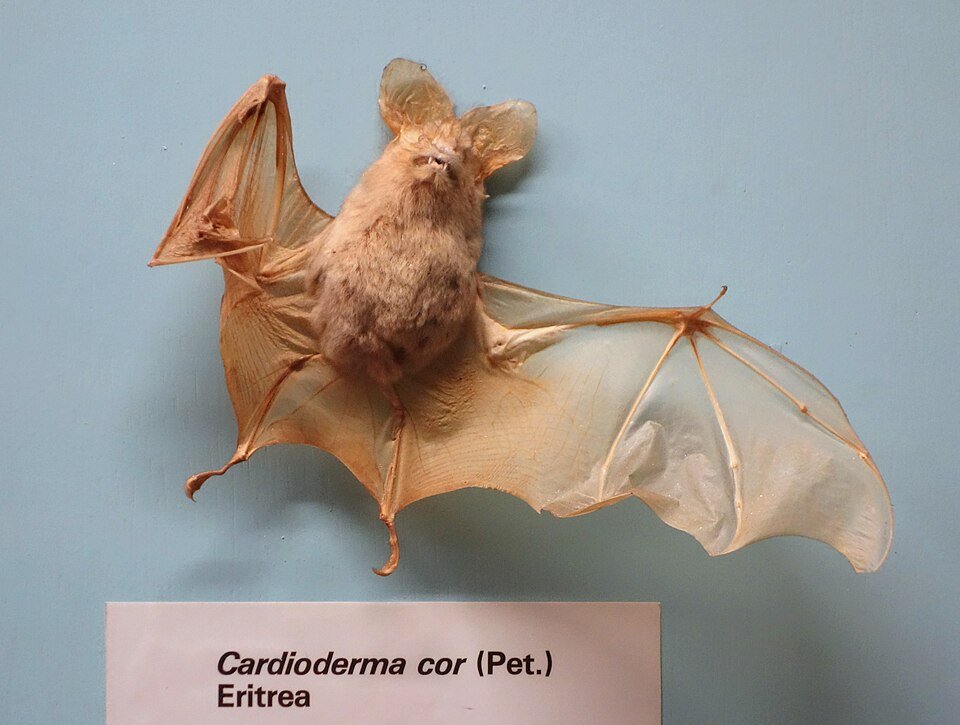
The yellow-winged bat is a carnivorous African bat in the family Megadermatidae, sometimes called the yellow-winged false vampire. It has large ears, broad wings and a distinctive appearance, and hunts insects and other small prey after dark. Its name should not be confused with blood-feeding vampire bats; this species does not feed on blood. Historical Kilimanjaro records document it at Kibongoto and Engare Nairobi in cultivated and bushland habitats below the forest.
How to Identify the Animal
Large conspicuous ears, broad wings, a relatively large head and a distinctive facial appearance characterise this species. Fur is generally brownish to grey-brown. Its body structure reflects a carnivorous hunting lifestyle rather than fruit feeding. Use a genuine photograph of Lavia frons; it should not be confused with fruit bats, horseshoe bats or other insect-eating bats.
Habitat and Distribution on Mount Kilimanjaro
The 1995 publication The Mammals of Kilimanjaro documented the yellow-winged bat at Kibongoto and Engare Nairobi, associating its presence with cultivated landscapes and bushland below the forest. These are historical locality records, not modern camera-trap or 2016 survey confirmations, and no current population estimate or exact local elevation is claimed. Across its wider range the species uses savanna, open woodland, shrubland and riparian habitats with suitable trees and shelter. It is not presented here as a species of the high forest or alpine zones.
Nocturnal Activity
Nocturnal activity is typical, with hunting after dark in suitable open habitats. Daytime sightings are unlikely.
Kilimanjaro Research and Evidence
The historical evidence comes from the 1995 publication The Mammals of Kilimanjaro by Grimshaw, Cordeiro and Foley, which recorded Lavia frons at Kibongoto and Engare Nairobi and described its presence in cultivation and bushland below the forest. No comparable modern Kilimanjaro-specific field record is claimed here. These locality records must not be presented as camera-trap detections, 2016 survey observations or 2026 confirmations.
Diet and Feeding Behaviour
Carnivorous, taking insects, other arthropods and small vertebrates where available. It uses its sensory abilities to locate and capture prey. It is not a blood-feeding bat, and it does not feed primarily on fruit or nectar. No Kilimanjaro prey list is claimed.
Behaviour and Social Life
Mainly nocturnal, roosting during daylight and becoming active after dark to hunt. Individual bats may use tree hollows or buildings where shelter is available. No Kilimanjaro roosting colony is claimed.
Nesting and Shelter
Reported roosts include tree hollows and suitable sheltered structures. Roosting may vary with habitat and shelter availability. No particular Kilimanjaro cave, building or roost site is claimed here.
Predators and Natural Threats
Potential predators include larger birds of prey and other animals capable of catching bats. Roost disturbance and habitat change may affect populations in the wider range; no specific Kilimanjaro predator is claimed.
Communication and Calls
The species uses echolocation and other senses to navigate and locate prey. No exact call frequency or Kilimanjaro acoustic recording is claimed.
Reproduction and Breeding
The species gives birth to live young, with maternal care during early development. Reproductive information is presented cautiously, and no Kilimanjaro breeding season, colony size or local pregnancy record is asserted.
Ecological Importance
As a predator of insects and other small animals, the yellow-winged bat participates in natural food webs. Its precise local effect on prey populations has not been quantified in the Kilimanjaro evidence used here.
Conservation Status
The global IUCN assessment published in 2017, based on a 2016 assessment, lists the yellow-winged bat as Least Concern. This global category does not establish the condition of any local Kilimanjaro population, and no population estimate is asserted.
Wildlife Watching on Kilimanjaro
Historical records come from Kibongoto and Engare Nairobi in the wider landscape. Its nocturnal behaviour means encounters are unlikely during daytime climbs, and the presence of the species at any particular site cannot be promised. Never disturb bats or roosts.
Route and Habitat Occurrence
Historical Kilimanjaro-area records: Kibongoto and Engare Nairobi. No modern camera-trap or survey confirmation is claimed, and no occurrence is assigned to Machame, Marangu, Lemosho, Shira, Rongai, Northern Circuit, Umbwe, Mweka or Kilema.
Honest Expectations
This species is supported by historical locality records only in the evidence used here. Visitors should not expect to see it during a climb, and the records must not be treated as current population or route evidence.
Frequently Asked Questions
About Yellow-winged Bat on Kilimanjaro
What is the yellow-winged bat?
A carnivorous African bat with large ears and broad wings in the family Megadermatidae.
What is its scientific name?
Lavia frons.
Which family does it belong to?
Megadermatidae, the false vampire bats.
Is the yellow-winged bat found on Mount Kilimanjaro?
It has historical locality records in the wider Kilimanjaro landscape.
Where was it historically recorded on Kilimanjaro?
At Kibongoto and Engare Nairobi.
What is Engare Nairobi?
A locality in the wider Kilimanjaro landscape mentioned in the historical record.
What is Kibongoto?
A locality in the wider Kilimanjaro area where the species was historically recorded.
Is the yellow-winged bat a vampire bat?
It is sometimes called a false vampire because it hunts small animals, but it does not feed on blood.
What does the yellow-winged bat eat?
Insects, other arthropods and small vertebrates.
Is it carnivorous?
Yes. It hunts small animal prey.
Is it nocturnal?
Yes, it is mainly active at night.
Where does it roost?
Tree hollows and suitable sheltered locations are reported; no specific Kilimanjaro roost is claimed.
Does it live in caves?
Caves are not claimed here as a Kilimanjaro roost for this species.
Does it roost alone?
It often roosts individually, according to general species information.
How does it find prey?
Through echolocation and other sensory abilities.
Does it use echolocation?
Yes, like other bats it uses echolocation for navigation and hunting.
How does it reproduce?
It gives birth to live young with maternal care; no local breeding record is asserted.
Is the yellow-winged bat endangered?
No. Its global IUCN status is Least Concern.
Can visitors see it on a Kilimanjaro climb?
No sighting can be guaranteed; it is nocturnal and known here from historical records.
What role does it play in the ecosystem?
It consumes insects and other small prey as part of natural food webs.


Sources and Further Reading
Research foundations
Grimshaw, J.M., Cordeiro, N.J. & Foley, C.A.H. (1995). The Mammals of Kilimanjaro. African Journal of Ecology.
Elevational Distribution and Ecology of Small Mammals on Africa's Highest Mountain (2014 field study).
Tanzania National Parks — Kilimanjaro National Park official information.
UNEP-WCMC — Kilimanjaro World Heritage Datasheet.
Discover Kilimanjaro’s Wildlife
Explore the mountain responsibly with African Majestic Adventure and learn about its animals with local guides.