

.png)
African Purple Swamphen
Porphyrio madagascariensisA striking wetland rail of Africa — brilliantly coloured, long-legged, and perfectly adapted to life among reeds and marsh vegetation.
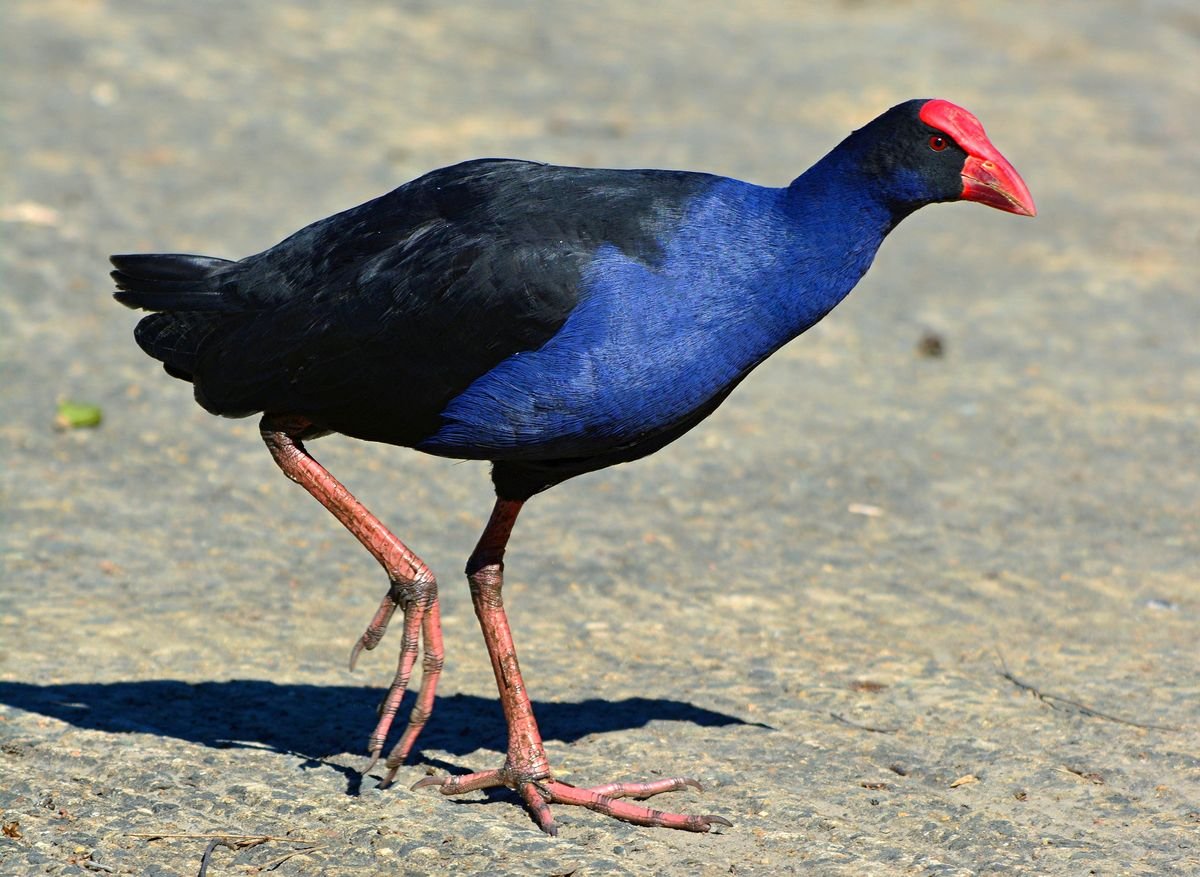
The African Swamphen (Porphyrio madagascariensis) is a large rail of the family Rallidae, recognised by its vivid violet-blue to purple plumage, oversized red bill and frontal shield, long red legs, and very long toes. It lives in freshwater wetlands, marshes, swamps, lake margins and other areas of dense aquatic vegetation, where it walks confidently through reeds and floating plants.
African Purple Swamphen Quick Facts
What Is the African Purple Swamphen?
The African Purple Swamphen, commonly called the African Swamphen, is a large, colourful member of the rail family Rallidae. Its scientific name is Porphyrio madagascariensis. It is one of the most visually dramatic wetland birds in Tanzania, combining deep violet and blue plumage with a bold red bill, a red frontal shield, red legs and remarkably long toes.
The name can vary between taxonomic authorities. BirdLife International currently treats the African form within the broader Purple Swamphen complex as Porphyrio porphyrio, while IOC-style treatments recognise the African Swamphen as the separate species Porphyrio madagascariensis. For a Tanzania-focused field guide, the latter name is useful because it clearly identifies the African taxon.
Unlike many secretive rails, swamphens often walk openly across floating vegetation, mud edges and grassy marsh margins. Their powerful legs and elongated toes allow them to move across soft ground and aquatic plants while feeding on vegetation and a wide range of small animal prey.
Why It Stands Out
The combination of colour, size and behaviour makes the African Swamphen unusually easy to appreciate once it is located. A bird can look almost black at a distance, yet sunlight reveals saturated blue, violet and green tones. Its white undertail contrasts sharply with the darker body when the tail is raised, creating one of its most useful field marks.
How to Identify an African Purple Swamphen
The African Purple Swamphen is a large, heavy-looking rail with a distinctive silhouette. Look for these features when scanning reedbeds, marsh margins and shallow freshwater habitats:
- Head and underparts: Deep violet-blue to purple across the head, neck, breast and belly.
- Back: Darker greenish, blue-green or dusky upperparts that can change dramatically under different light.
- Bill and frontal shield: A thick, triangular red bill joined to a conspicuous red frontal shield.
- Legs and feet: Long reddish legs ending in exceptionally long toes adapted for walking through vegetation and soft wet ground.
- Undertail: Bright white undertail coverts that flash into view when the bird lifts or flicks its tail.
- Size and posture: Much larger and more robust than many crakes and moorhens, often walking with a deliberate, high-stepping gait.
Distinguishing from Similar Wetland Birds
The African Purple Swamphen can be separated from the Black Crake and moorhens by its much larger body, massive red bill and frontal shield, vivid blue-purple plumage, and very long toes. It also appears more heavily built than the smaller rails it may share a wetland with.
Behavior & Social Life
African Purple Swamphens are confident wetland walkers. They spend much of their time moving among reeds, sedges, floating vegetation and damp grassy edges rather than swimming continuously. They may feed alone, in pairs or in small family groups, and their loud calls can help reveal birds hidden in dense vegetation.
Daily Activity
- Foraging: Walks slowly through vegetation while pulling at shoots, leaves, seeds, roots and other edible plant material.
- Animal prey: Takes insects and other small invertebrates and may also eat snails, frogs, eggs or other small animal foods when available.
- Movement: Strong flier when necessary, but commonly prefers walking through wetlands and lifting into flight only when travelling or escaping danger.
- Tail display: Often flicks or raises the tail, exposing the contrasting white undertail.
- Vocal communication: Uses loud, penetrating calls and softer contact notes between members of a group.
Movement & Seasonality
The African Swamphen is largely sedentary where permanent or dependable wetlands remain available, but local movements can occur as water levels, vegetation and food supplies change. Birds may shift between marshes, lake edges, river floodplains and other nearby wetland habitats.
Habitat & Distribution
The African Purple Swamphen is strongly associated with freshwater habitats rich in emergent or floating vegetation. Typical habitats include:
- Freshwater marshes with reeds, sedges and other tall wetland plants.
- Swamps and lake margins where shallow water meets dense cover.
- Floodplain wetlands and river-associated vegetation where seasonal water creates feeding areas.
- Vegetated channels, dams and ponds with suitable cover and a stable food supply.
Distribution: The African taxon occurs across broad parts of sub-Saharan Africa and Madagascar. Its wetland distribution is naturally patchy because it depends on suitable freshwater and marsh habitat.
Tanzania Distribution
In Tanzania, the species is documented from a range of wetlands and protected areas. Records and checklists include Lake Manyara, Ngorongoro, Serengeti and Arusha National Park, while Tanzania bird records also document birds at Nanja Dam, Yaeda Valley, Lake Eyasi and the Malagarasi River.
African Purple Swamphen in Tanzania
Tanzania offers excellent opportunities to look for African Swamphens around permanent freshwater, marsh and lake-margin habitats. The species is recorded from several important birding and safari landscapes.
Lake Manyara National Park
One of the strongest documented Tanzania locations. African Swamphens have been photographed and listed around Lake Manyara's wetland habitats.
Lake Manyara safariNgorongoro Crater
Ngorongoro bird checklists include African Swamphen, making wet crater-floor wetlands and marshy areas worth checking during bird-focused visits.
Ngorongoro safariSerengeti National Park
The Serengeti bird checklist records African Swamphen, especially relevant around suitable wetland and water-associated vegetation.
Serengeti safariArusha National Park
The Arusha National Park checklist records African Swamphen, adding another accessible Tanzania birding destination to the species' known local range.
Arusha safariSafari Methods
- Birdwatching walks and wetland scanning are often more productive than simply driving past a marsh.
- Game drives can work where roads pass close to lake margins, seasonal wetlands and open marsh habitat.
- Wildlife photography benefits from early light, which can reveal the metallic purple, blue and green tones of the plumage.
- Patient listening helps because vocal birds may be detected before they emerge from reeds.
Best Time to See Them
African Swamphens can be encountered year-round in suitable Tanzanian wetlands. Local visibility often improves when water levels leave open feeding margins or when birds move through shorter vegetation. Early morning and late afternoon are especially pleasant for birdwatching and photography.
Diet & Feeding
The African Purple Swamphen is an adaptable omnivorous wetland feeder, with a diet strongly influenced by the plants and small animals available in its habitat. It is especially well known for eating tender vegetation but is not limited to plant foods.
Food Sources
- Reeds and shoots: Young shoots, stems and leaves of aquatic and wetland plants.
- Seeds and roots: Seeds, roots and other nutritious plant parts taken from wetland vegetation.
- Invertebrates: Insects, snails and other small invertebrates provide animal protein.
- Small vertebrates and eggs: Opportunistically takes frogs, eggs and other small animal foods when available.
Feeding Behavior
The swamphen uses its strong bill to tear and manipulate vegetation, sometimes holding food with its feet while feeding. Its long toes are particularly valuable when walking across floating plants, soft mud and dense vegetation. This combination of bill strength and foot control lets it exploit food patches that many smaller wetland birds cannot use as effectively.
Breeding & Life Cycle
African Swamphens breed in wetlands where dense vegetation provides both food and cover. Family groups can show cooperative behaviour, with more than one bird participating in the care and defence of young in some populations of the wider swamphen complex.
Nesting
- Nest: A substantial platform of trampled or woven reeds and other wetland vegetation, usually close to or above water.
- Site: Dense marsh vegetation gives the nest concealment and provides easy access to feeding areas.
- Eggs: Clutch size varies; breeding data for swamphens are variable across populations, so a single rigid clutch figure should be avoided for the African taxon.
- Breeding strategy: In suitable conditions, breeding can be repeated when food and water remain dependable.
Chicks
Young are reared within the protection of dense wetland vegetation and receive care from adults and, in some groups, other family members. The young progressively become more independent as they learn to forage and move through the marsh.
Conservation Status
The African Purple Swamphen is currently treated as Least Concern in broad global assessments of the Purple Swamphen complex. BirdLife South Africa notes that BirdLife International does not recognise the African taxon as a separate species and instead assesses it within Porphyrio porphyrio; this taxonomic difference is important when comparing sources.
The species is not a red-alert conservation story, but healthy wetlands remain essential. The most relevant local pressures are those that degrade freshwater habitats rather than direct targeting of the bird.
- Wetland drainage: Conversion of marshes can remove feeding and nesting areas.
- Water-level change: Severe alteration of natural flooding regimes can reduce suitable vegetation and shallow-water habitat.
- Pollution: Agricultural and urban contamination can affect wetland food webs and water quality.
- Habitat fragmentation: Loss of connected wetland systems can reduce the availability of refuge during seasonal changes.
Comparisons
The African Purple Swamphen is easiest to identify when compared with other large Tanzania wetland rails. The combination of size, colour, bill and toe length is especially useful.
| Feature | African Purple Swamphen | Black Crake | Red-knobbed Coot |
|---|---|---|---|
| Scientific name | Porphyrio madagascariensis | Zapornia flavirostra | Fulica cristata |
| Overall size | Large, about 40–46 cm | Smaller rail, about 30–32 cm | Large waterbird, about 38–43 cm |
| Body colour | Violet-purple with blue/green tones | Mostly very dark slate to black | Mostly dark grey-black |
| Bill | Large red bill with red frontal shield | Greenish-yellow bill and frontal shield | White bill with red frontal shield |
| Feet | Long red legs and very long toes | Long legs with long toes | Lobed toes, adapted for swimming |
| Typical feeding habitat | Marshes, reeds, lake margins and wet grass | Shallow wetlands, marshes and wet grass | Open water, lakes and vegetated margins |
| Best field clue | Brilliant purple body + huge red bill | Dark body + yellowish bill | White bill + red shield + lobed toes |
Did You Know?
Brilliant Colours
Sunlight can reveal an intense mix of violet, purple, blue and green that is easy to miss when the bird is in shadow.
Huge Toes
Its exceptionally long toes help spread its weight as it walks through soft mud and across floating vegetation.
Red Front Shield
The large red bill joins a conspicuous red frontal shield, giving the bird one of the boldest faces among African rails.
White Undertail
A flash of white beneath the tail can be a quick and useful clue when a bird turns away or raises its tail.
Wetland Specialist
Healthy marshes, reedbeds and lake margins are central to its daily life, from feeding to nesting and shelter.
Taxonomy Has Changed
Different authorities treat the African form differently, with some recognising it as Porphyrio madagascariensis and others placing it within the wider Purple Swamphen species.
There is something unmistakable about an African Swamphen once it steps into the open. The bird may emerge from a wall of reeds looking almost black, then the light catches its feathers and a deep purple-blue brilliance appears. Its heavy red bill and long red legs make it look built for a life between land and water. In Tanzania's wetlands, finding one is less about speed and more about patience: pause, scan the reed edges, listen for the calls, and the marsh can suddenly reveal one of its most spectacular birds.
Gallery
Frequently Asked Questions
The African Purple Swamphen, or African Swamphen, is a large wetland rail of the family Rallidae. It is recognised by its violet-blue to purple plumage, red bill and frontal shield, and long red legs and toes.
Tanzania records include Lake Manyara, Ngorongoro, Serengeti and Arusha National Park, with additional documented birds at Nanja Dam, Yaeda Valley, Lake Eyasi and the Malagarasi River.
It feeds heavily on wetland vegetation such as shoots, leaves, seeds and roots, while also taking insects, snails and other small animal foods.
It is assessed as Least Concern in broad global assessments, although taxonomic authorities differ on whether the African form is a separate species or part of the wider Purple Swamphen complex.
Look for the combination of large body, deep purple-blue plumage, heavy red bill and frontal shield, long red legs, very long toes, and a bright white undertail.
It favours freshwater marshes, swamps, reedbeds, lake margins, floodplain wetlands and other habitats with dense aquatic vegetation.
The African form is generally treated as resident where suitable wetland habitat persists, but local movements can occur as water levels and food availability change.
BirdLife International currently assesses the African form within Porphyrio porphyrio, while IOC-style taxonomy recognises Porphyrio madagascariensis as the African Swamphen. The difference reflects changing species concepts within the Purple Swamphen complex.
References & Further Reading
- BirdLife South Africa – African Swamphen species account, taxonomy, identification and 2025 regional conservation assessment.
- Tanzania Birds – African Swamphen page documenting Tanzania photographs and records including Lake Manyara, Lake Eyasi, Yaeda Valley, Nanja Dam and the Malagarasi River.
- Exotic Birding Tanzania – Tanzania-wide checklist and park checklists recording African Swamphen at multiple protected areas.
- African Bird Club – Tanzania photographic record of African Swamphen at a dam near Nanja.
- Cornell / Clements Checklist history – documentation of the Purple Swamphen species split and treatment of the African taxon.
- ITIS and current taxonomic references – supporting names and classification for the genus Porphyrio.