

.png)
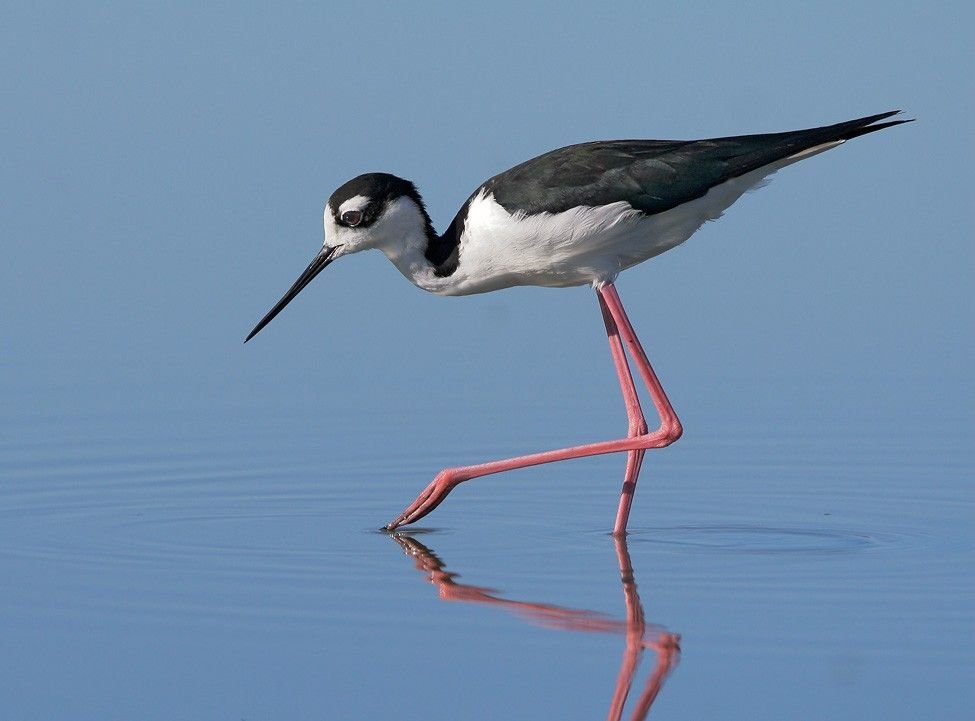
Black-winged Stilt
Himantopus himantopusA striking long-legged wetland wader, stalking shallow water on impossibly slender red legs.
The Black-winged Stilt (Himantopus himantopus) is an elegant wader in the family Recurvirostridae, recognized by its extremely long pink-red legs, long straight bill, black-and-white plumage and graceful high-stepping walk. It occurs around shallow freshwater and saline wetlands across much of Africa and is a familiar sight where open muddy margins provide feeding habitat.
Black-winged Stilt Quick Facts
What Is the Black-winged Stilt?
The Black-winged Stilt (Himantopus himantopus) is a graceful wader of the family Recurvirostridae. Its defining proportions are extraordinary: very long legs, a slender straight bill and a compact body carried high above shallow water. The combination of black-and-white plumage and vivid reddish legs makes it one of the most immediately recognizable wetland birds in Tanzania.
It is closely associated with open water edges where the mud is shallow enough for its long legs to keep the body above the surface. Rather than swimming or plunging deeply, it typically walks through very shallow water, picking or probing for small prey near the surface.
The species has a broad distribution across parts of Europe, Africa and Asia. In Tanzania, it is a well-documented wetland bird and can occur at productive lakes, marshes, pans and lagoon margins.
How to Identify a Black-winged Stilt
The Black-winged Stilt is difficult to mistake once its proportions are familiar: an upright, slim-bodied wader standing on exceptionally long red or pink-red legs, with a long straight bill and sharply contrasting black-and-white plumage.
- Legs: Exceptionally long pink-red legs are the most obvious field mark.
- Plumage: White body contrasts with a glossy black head, neck and upperparts, with additional dark wing patterning.
- Bill: Long, straight and slender, suited to picking and probing in shallow water.
- Body: Slim-bodied and upright, giving a distinctive stilt-like silhouette.
- Flight: Shows broad white wing areas contrasting strongly with black flight feathers and upperparts.
- Movement: Walks with high, deliberate steps through shallow water and soft mud.
Distinguishing the Black-winged Stilt from Similar Stilts
Its combination of very long red legs, black-and-white plumage and straight bill separates it from the darker African Black Stilt and from the shorter-legged Pied Avocet. At a distance, posture and leg length are often the quickest clues.
Behavior & Social Life
Black-winged Stilts are active, alert wetland birds. They often feed alone or in loose groups, walking through shallow water while constantly scanning the surface and mud for edible prey.
Daily Activity
- Foraging: Walks steadily through shallow water, picking small prey from the surface or probing soft mud.
- Alarm and vigilance: Long legs and upright posture give it a wide field of view while feeding in exposed wetlands.
- Vocalization: Calls are typically short, sharp notes used during contact, alarm and territorial interactions.
Movement & Migration
Populations of the Black-winged Stilt can be resident or locally mobile depending on region and water conditions. In Tanzania, individuals may track productive wetland habitats as water levels and food availability change.
Habitat & Distribution
The Black-winged Stilt favors open, shallow wetlands where it can walk and forage efficiently:
- Lake margins Shallow edges of freshwater and alkaline lakes with exposed mud or short vegetation.
- Marshes and pans Seasonal wetlands where receding water concentrates small aquatic prey.
- Lagoons and estuaries Sheltered shallow water and muddy margins, especially where feeding flats are exposed.
- Flooded grassland Open wet areas with shallow standing water and sparse vegetation.
Distribution: The species has a wide Old World distribution across Africa, Europe and Asia. In Africa it is especially associated with open wetlands, while its broad range allows it to exploit both freshwater and saline habitats.
Tanzania Distribution
The Black-winged Stilt is recorded in Tanzania and can be encountered around major wetland systems and protected-area lakes. Tanzania checklists include the species, and documented records include Lake Manyara and the Moshi area. In northern Tanzania, birdwatchers should pay particular attention to shallow lake edges, pans and muddy margins.
Black-winged Stilt in Tanzania
Tanzania offers excellent wetland habitats for the Black-winged Stilt. These locations provide strong opportunities to look for the species while exploring the country’s major birding and safari landscapes:
Lake Manyara National Park
A strong wetland destination where large waterbird concentrations gather along shallow lake margins and seasonally exposed feeding flats.
Lake Manyara birdingSerengeti National Park
Recorded among the park’s diverse wetland and floodplain birdlife, particularly where shallow water and muddy margins persist.
Serengeti birdingNgorongoro Conservation Area
Wetland habitats around the crater and surrounding highland systems can attract long-legged waders when feeding conditions are suitable.
Ngorongoro birdingMoshi & Kilimanjaro wetlands
Documented around the Moshi area, including managed and natural wetland habitats where shallow water attracts waders.
Kilimanjaro birdingSafari Methods
- Game drives and lake-edge scans — inspect shallow margins, pans and wet grassland.
- Birdwatching walks — use binoculars to watch feeding birds from a respectful distance.
- Wildlife photography — the tall legs, clean plumage and reflective wetland settings make strong subjects.
Best Time to See Them
The Black-winged Stilt can be encountered when suitable wetland habitat is available. In Tanzania, timing can vary with rainfall and water levels, so productive shallow margins are often more important than a single fixed month. Early morning and late afternoon provide comfortable light and calmer birdwatching conditions.
Diet & Feeding
The Black-winged Stilt is a visual and tactile feeder that searches shallow water and exposed mud for small aquatic prey. Its long legs allow it to forage while keeping its body well above the water surface.
Food Sources
- Aquatic insects: Small insects and larvae found at the water surface and in wet mud.
- Crustaceans: Tiny freshwater or brackish crustaceans taken in shallow feeding areas.
- Molluscs and other invertebrates: Small soft-bodied or shelled prey encountered while probing and picking.
- Small aquatic animals: Tadpoles, tiny fish and other suitably sized aquatic prey may supplement the diet.
Feeding Behavior
Watch for a steady, deliberate walk through ankle-deep water. The Black-winged Stilt frequently pauses to pick prey from the surface or probe soft substrate, then continues with long, measured steps.
Breeding & Life Cycle
Breeding is closely linked to water conditions and the availability of secure open nesting sites near feeding habitat. Pairs defend nesting territories during the breeding season.
Nesting
- Nest: A shallow scrape or simple nest built on bare ground, mud, sand or low vegetation near water.
- Eggs: Usually a small clutch, commonly around 3–5 eggs, with cryptic coloration that blends into the nesting surface.
- Incubation: About 25 days, with both adults involved in the breeding cycle.
Chicks
The chicks are precocial and leave the nest soon after hatching, following the adults to nearby feeding areas. Their camouflage helps them remain inconspicuous among mud, short vegetation and wetland debris.
Conservation Status
The Black-winged Stilt is assessed globally as Least Concern. It has a broad geographic range and remains widespread across suitable wetlands.
Its conservation depends on maintaining functional wetlands, water quality and safe breeding and feeding areas. Local declines can still occur where wetlands are drained, heavily polluted, overdeveloped or altered beyond the species’ feeding requirements.
Important local pressures include:
- Wetland loss Drainage, conversion and development can remove shallow feeding and nesting habitat.
- Water-quality changes Pollution and altered water regimes can reduce the small aquatic prey on which the birds depend.
Comparisons
The Black-winged Stilt is most likely to be compared with other long-legged wetland waders. Proportion, leg colour and bill shape are useful field clues.
| Feature | Black-winged Stilt | Pied Avocet | African Jacana |
|---|---|---|---|
| Leg colour | Red or pink-red | Black or dark grey | Blue-grey |
| Bill | Long, straight, slender | Upturned | Shorter and thicker |
| Body pattern | Black-and-white | Black-and-white | Rich chestnut and blue-purple |
| Habitat | Shallow wetlands, lakes and lagoons | Shallow wetlands and mudflats | Vegetated freshwater wetlands |
| Feeding style | Walking and picking/probing | Sweeping and probing with upturned bill | Walking on floating vegetation and picking prey |
| Diet | Rodent specialist | Reptiles, small mammals | Large gamebirds, mammals |
Did You Know?
Remarkable Legs
Its legs are so long that the bird can feed in shallow water while keeping most of its body above the surface.
Wetland Specialist
It is strongly associated with open water margins, shallow lagoons, lake edges, marshes and other productive wetlands.
Black-and-White Contrast
The crisp contrast between dark upperparts and white plumage makes it highly conspicuous at close range.
Old World Range
The species occurs across parts of Europe, Africa and Asia, giving it one of the broadest ranges among stilts.
Precocial Young
Chicks leave the nest soon after hatching and can follow adults to feeding areas.
Elegant Walking Style
Its high-stepping walk is one of the most memorable behaviours to watch on a quiet wetland shore.
There is something almost surreal about a Black-winged Stilt standing at the edge of a Tanzanian lake: a compact body balanced on impossibly long red legs, moving with calm precision through shallow water. It is a beautiful reminder that wetland birds are shaped by tiny details of habitat and behaviour. Give the bird a quiet shoreline, enough shallow water and a healthy supply of small prey, and its unusual design suddenly makes perfect ecological sense.
Gallery
Frequently Asked Questions
The Black-winged Stilt (Himantopus himantopus) is a long-legged wader of the family Recurvirostridae, recognized by its red legs, straight bill and black-and-white plumage.
It is recorded in Tanzania and can be sought around major wetlands, including Lake Manyara, Serengeti wetland habitats and the Moshi area.
It feeds mainly on small aquatic invertebrates and insects, with other small aquatic prey such as tadpoles or tiny fish sometimes supplementing the diet.
No. The Black-winged Stilt is currently assessed as Least Concern globally.
The long legs allow it to wade through shallow water while keeping its body elevated, helping it exploit feeding zones that shorter-legged waders cannot reach as efficiently.
It nests close to water, usually laying a small clutch in a shallow scrape or simple nest. Chicks are precocial and leave the nest soon after hatching.
Look for the combination of extremely long red legs, black-and-white plumage, an upright stance and a long straight bill.
Occurrence can vary with local conditions and wetland water levels. Tanzania supports the species, but its presence at individual wetlands can change seasonally or locally.
References & Further Reading
- BirdLife International – Current global conservation framework and species information for the Black-winged Stilt.
- AEWA – Black-winged Stilt species profile, taxonomy, range and Least Concern assessment.
- eBird / Cornell Lab – Identification, distribution and observation resources for the species.
- Tanzania bird checklist – National checklist evidence confirming the species in Tanzania.
- eBird Tanzania records – Documented observations including the Moshi area and other Tanzanian localities.
- Lake Manyara bird records – Wetland occurrence evidence for Black-winged Stilt at Lake Manyara.
- Tanzania birding sources – Regional field records and habitat context for wetland birdwatching in Tanzania.