

.png)
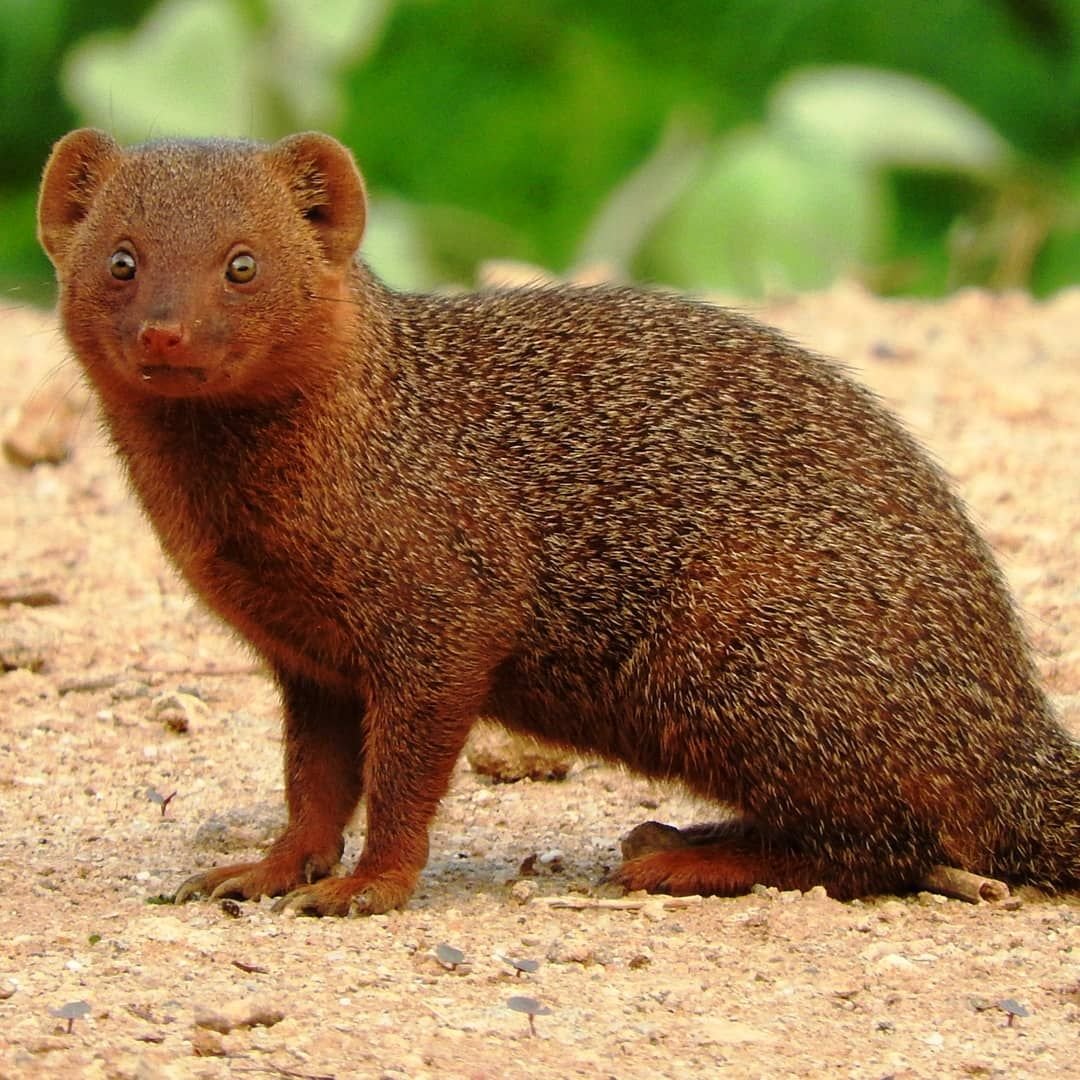
Dwarf Mongoose
Helogale parvulaAfrica's smallest mongoose, living in organised clans.
Highly social families that den in termite mounds and post sentinels.
Dwarf Mongoose Quick Facts
What Is a Dwarf Mongoose?
The dwarf mongoose (Helogale parvula) is Africa's smallest mongoose, weighing barely more than a few apples. It belongs to the mongoose family (Herpestidae) and lives in tightly organised clans near termite mounds.
Despite its size, it is one of the most successful small carnivores on the savanna, thanks to sophisticated teamwork: sentinels watch from high points, babysitters guard the young.
Why Is the Dwarf Mongoose So Small?
Being tiny has its advantages. A dwarf mongoose can slip into termite mounds, burrows and thickets where larger predators cannot follow — turning the smallest body on the plains into one of the safest.
Its size is paired with a rigid social system that makes the clan more powerful than any individual. Sentinel mongooses climb to elevated posts and warn the clan with specific alarm calls, while the rest forage in safety below.
What Does the Dwarf Mongoose Eat?
The dwarf mongoose is an insect-heavy omnivore, dining on beetles, termites and other invertebrates, with small vertebrates and fruit added when available.
- Beetles and their larvae
- Termites and ants
- Grasshoppers, crickets and other insects
- Small vertebrates and eggs
- Fruit and berries
How Does It Hunt?
The clan forages together beneath its sentinels, digging and pouncing in constant motion.
Where Does the Dwarf Mongoose Live?
The Dwarf Mongoose is found across parts of Africa, with its main populations in eastern and, where applicable, southern regions. Its preferred habitat is Dry grassland & termite mounds.
Eastern Africa
- Tanzania
- Kenya
- Uganda
Southern Africa
- South Africa
- Botswana
- Namibia
Preferred Habitat
It favours dry grassland & termite mounds, where cover, food and shelter are in balance.
Dwarf Mongoose in Tanzania
Dwarf mongoose clans are a delight of Tanzania's open savanna, easily watched as they forage around their termite-mound dens.
Where Sightings May Occur
- Serengeti National Park — clans are regularly seen around kopjes and termite mounds.
- Tarangire National Park — sightings are often possible on the open plains.
- Other northern reserves — widespread in suitable habitat.
Where Can You See a Dwarf Mongoose on Safari?
The Dwarf Mongoose can be seen in several parks and reserves in Tanzania. The table below gives a realistic guide to habitat suitability.
| Destination | Habitat suitability | Sightings |
|---|---|---|
| Serengeti | Excellent — kopjes and termite mounds | Possible |
| Tarangire | Good — open woodland | Possible |
| Other reserves | Suitable habitat | Possible |
Dwarf mongooses are regularly encountered in suitable Serengeti and Tarangire habitats, but individual sightings remain unpredictable.
Want to explore Tanzania's lesser-known wildlife?
Dwarf Mongoose Behavior
Clan living
Clans — usually 10-20, sometimes up to 30 — forage, groom and sleep together.
Sentinel system
Lookouts post alarms from high points.
Communication
Distinct alarm calls for different threats.
Activity
Diurnal — active during the day.
Dens
Termite mounds and old burrows — these mounds double as shelter, nursery and lookout post, often shared with the termites that built them.
Dwarf Mongoose Family Life
A single dominant female normally accounts for most of the clan's breeding, while the dominant male is her mate and subordinate group members help care for the young. After a gestation of roughly 49-56 days she typically produces a litter of around four pups; babysitters stay behind at the den, sentinels keep watch, and the whole clan pitches in to raise the next generation.
Physical Adaptations
Every feature of the Dwarf Mongoose is finely tuned for life in dry grassland & termite mounds.
- Tiny, slim build — the smallest African mongoose
- Darker or reddish-brown coat depending on region
- Short legs built for dashing through grass
- Sharp teeth for crushing insects
Vital statistics: body length approximately 18-28 cm long + tail, weight 200-350 g, lifespan typically 10-12 yrs.
Dwarf Mongoose vs Banded Mongoose & Slender Mongoose
How does the Dwarf Mongoose compare with its fellow African carnivores?
| Feature | Dwarf Mongoose | Banded Mongoose | Slender Mongoose |
|---|---|---|---|
| Scientific name | Helogale parvula | Mungos mungo | Herpestes sanguineus |
| Weight | 200-350 g | 1.5-2.25 kg | 300-700 g |
| Size | 18-28 cm long + tail | 30-45 cm long + tail | 27-40 cm long + tail |
| Group size | Usually 10-20, up to 30 | 10-40 | Often solitary or pairs |
| Lifespan | 10-12 yrs | 10-12 yrs | 10 yrs |
| Diet | Omnivore | Omnivore | Carnivore |
| Conservation | Least Concern | Least Concern | Least Concern |
Dwarf Mongoose vs Other African Predators
Compare the Dwarf Mongoose with Africa's other carnivores on their own species pages:
- Banded Mongoose — compare in detail.
- Slender Mongoose — compare in detail.
- Golden Jackal, Black-backed Jackal & Side-striped Jackal — the canids.
- African Wild Dog — the cooperative hunter.
- Lion, Leopard & Cheetah — the big cats.
Predators of the Dwarf Mongoose
For such a dwarf mongoose, the savanna holds many dangers. It is important to distinguish between predators of adults and the greater threats facing young animals.
Hawks and eagles are the dwarf mongoose's biggest threat, striking from above.
Snakes, including cobras, may raid dens, while jackals and larger carnivores can take unwary adults.
Conservation Status
Least Concern does not mean the species has no conservation challenges. It means the species is not currently assessed in a higher IUCN threat category at the global level.
Common and widespread, the dwarf mongoose is listed as Least Concern, though loss of open grassland habitat is a local concern.
Did You Know?
At 200–350 g, the dwarf mongoose is one of the smallest carnivores in Africa.
Sentinels post alarms so the clan can feed in safety.
Its favourite den is a termite mound, shared with the termites.
Some clans forage alongside hornbills — each warns the other of danger.
Safari Guide's Perspective
Watch a dwarf mongoose clan for five minutes and you'll see a perfect little city of lookouts, babysitters and foragers. It's the most organised thing on two hundred grams you'll ever meet.
Dwarf Mongoose in Pictures
A closer look at the Dwarf Mongoose in its natural East African habitat — its striking appearance, habitat and behaviour are best appreciated up close.
Frequently Asked Questions
No — the Dwarf Mongoose is currently listed as Least Concern on the IUCN Red List, though local populations can still face habitat pressure.
The dwarf mongoose is an insect-heavy omnivore, dining on beetles, termites and other invertebrates, with small vertebrates and fruit added when available.
Across dry grassland & termite mounds in Eastern & Southern Africa, including parts of Tanzania.
Yes — in suitable habitat such as Serengeti & Tarangire, Tanzania, although sightings vary by species and season.
Approximately 18-28 cm long + tail in body length and 200-350 g in weight.
It is quick and agile, darting into termite mounds and thickets to escape danger rather than relying on raw speed.
Activity patterns vary by species — some are active by day, others almost entirely at night. Diurnal — active during the day.
Helogale parvula — a member of the Herpestidae family.
Key threats include habitat loss and local habitat changes, alongside natural predation.
Yes — dwarf mongooses are highly social, living in cooperative clans led by a dominant pair, with helpers that babysit and stand sentinel.
References & Further Reading
- IUCN Red List: Helogale parvula
- Animal Diversity Web (University of Michigan): Species accounts for African carnivores, including diet, size and behavior.
- Tanzania Wildlife Research Institute (TAWIRI): Monitoring wildlife populations in Tanzania.
- Estes, R. (1991). The Behavior Guide to African Mammals. University of California Press.
- Kingdon, J. (2015). The Kingdon Field Guide to African Mammals. Bloomsbury.
- About these facts: Weight, speed and lifespan are approximate adult ranges. They can vary with sex, age, season, location and the measurement method; conservation status should be checked against the current IUCN assessment.