

.png)
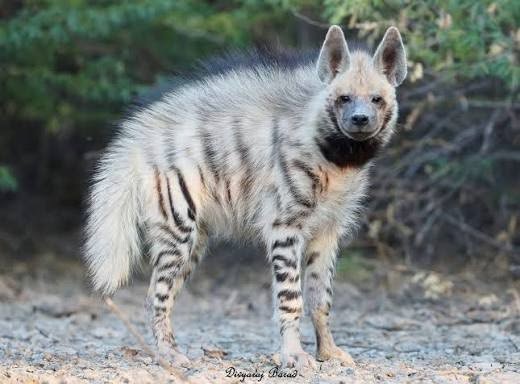
Striped Hyena
Hyaena hyaenaA shaggy, less common hyena of arid country.
Sightings are never guaranteed and depend on local conditions. Follow your guide and respect park rules.
A patient scavenger that also takes small prey.
Striped Hyena Quick Facts
What Is a Striped Hyena?
The striped hyena (Hyaena hyaena) is a shaggy, long-maned hyena of the family Hyaenidae, found in the drier, rockier parts of Africa. Smaller and less social than the spotted hyena, it lives a quieter, more solitary life.
A patient scavenger, it follows large predators and feeds on bones and scraps that other carnivores leave behind. With its thick mane and sloping back, it is unmistakable when seen in Tanzania's northern dry bush.
Why Is the Striped Hyena Less Common?
The striped hyena lives in drier, sparser country where food is harder to find, and it does so mostly alone or in small family groups. Its secretive, largely nocturnal habits make it far less visible than its spotted cousin.
It is also outcompeted by spotted hyenas in richer habitat. To survive, the striped hyena specialises in being adaptable and undemanding — an efficient scavenger that thrives where other carnivores cannot.
What Does the Striped Hyena Eat?
Primarily a scavenger, the striped hyena eats carrion and bones, supplemented by small prey, insects and fruit.
- Carrion and bones from other predators' kills
- Small mammals and young antelope
- Insects, including beetles and termites
- Birds, eggs and reptiles
- Fruit and vegetable matter
How Does It Hunt?
It scavenges by scent, walking long distances to locate carcasses and feed.
Where Does the Striped Hyena Live?
The Striped Hyena is found across parts of Africa, with its main populations in eastern and, where applicable, southern regions. Its preferred habitat is Arid bush & rocky country.
Eastern Africa
- Tanzania (northern dry bush)
- Kenya
- Ethiopia
Southern Africa
- Southern arid regions
- South Africa
Preferred Habitat
It favours arid bush & rocky country, where cover, food and shelter are in balance. Protected national parks across East Africa help maintain stable populations.
Striped Hyena in Tanzania
In Tanzania, the striped hyena is rarely encountered in suitable dry habitats in the north.
Where Sightings May Occur
- Northern dry bush — rarely encountered in suitable dry habitat.
- Remote arid areas — best searched for at night.
- Night drives — the most reliable way to encounter one.
Where Can You See a Striped Hyena on Safari?
The striped hyena can be seen in suitable dry habitat in northern Tanzania. The table below gives a realistic guide to habitat suitability.
| Destination | Habitat suitability | Sightings |
|---|---|---|
| Northern dry bush | Suitable arid habitat | Possible |
| Remote reserves | Thinly distributed | Possible |
| Night drives | Active after dark | Possible |
Striped hyenas are rarely encountered in suitable dry habitats in northern Tanzania, so individual sightings are never guaranteed.
Want to explore Tanzania's lesser-known wildlife?
Striped Hyena Behavior
Solitary
Lives alone or in small family groups.
Scavenging
A patient, efficient scavenger of bones.
Nocturnal
Almost entirely active after dark.
Communication
Howls and whines, rarely heard by visitors.
Dens
Caves and burrows in rocky country.
Striped Hyena Family Life
Striped hyenas are often seen singly or in pairs. The mother raises the cubs in a den among rocks, and the family may remain loosely associated for a time before the young disperse.
Physical Adaptations
Every feature of the Striped Hyena is finely tuned for life in arid bush & rocky country.
- Shaggy coat with a long, erectile mane
- Dark vertical stripes on the flanks
- Sloping back with a strong neck
- Robust jaws for crushing bones
Vital statistics: body length approximately 90-130 cm long, weight 25-45 kg, lifespan typically around 10-12 yrs in the wild (longer in captivity).
Striped Hyena vs Spotted Hyena & African Wild Dog
How does the Striped Hyena compare with its fellow African carnivores?
| Feature | Striped Hyena | Spotted Hyena | African Wild Dog |
|---|---|---|---|
| Scientific name | Hyaena hyaena | Crocuta crocuta | Lycaon pictus |
| Weight | 25-45 kg | 65 kg | 30 kg |
| Size | 90-130 cm long | 95-165 cm long | 75-110 cm long |
| Activity | Nocturnal, solitary scavenger | Nocturnal, clan hunter | Diurnal, pack hunter |
| Lifespan | 10-12 yrs (wild) | 10-12 yrs (wild) | 10-12 yrs (wild) |
| Diet | Carnivore | Carnivore | Carnivore |
| Conservation | Vulnerable | Least Concern | Endangered |
Striped Hyena vs Other African Predators
Compare the Striped Hyena with Africa's other carnivores on their own species pages:
- Spotted Hyena — compare in detail.
- African Wild Dog — compare in detail.
- Golden Jackal, Black-backed Jackal & Side-striped Jackal — the canids.
- African Wild Dog — the cooperative hunter.
- Lion, Leopard & Cheetah — the big cats.
Predators of the Striped Hyena
For such a striped hyena, the savanna holds many dangers. It is important to distinguish between predators of adults and the greater threats facing young animals.
Spotted hyenas and lions may dominate or kill striped hyenas where they overlap.
Cubs are vulnerable to larger predators and eagles.
Conservation Status
Vulnerable does not mean the species has no conservation challenges. It means the species is not currently assessed in a higher IUCN threat category at the global level.
The striped hyena is listed as Near Threatened — it is rarer and less studied than the spotted hyena, and faces habitat loss and persecution across parts of its range.
Did You Know?
It scavenges bones and scraps even lions cannot use.
A true specialist of dry, rocky, arid country.
One of Africa's most secretive, nocturnal carnivores.
Thinly scattered — every sighting is a special one.
Safari Guide's Perspective
A striped hyena sighting is a badge of honour for any guide. Patient night work in the dry north sometimes rewards the persistent — a shaggy shape, a rolling gait, and a species most visitors never see.
Striped Hyena in Pictures
A closer look at the Striped Hyena in its natural East African habitat — its striking appearance, habitat and behaviour are best appreciated up close.
Frequently Asked Questions
No — the Striped Hyena is currently listed as Vulnerable on the IUCN Red List, though local populations can still face habitat pressure.
Primarily a scavenger, the striped hyena eats carrion and bones, supplemented by small prey, insects and fruit.
Across arid bush & rocky country in Northern & Eastern Africa, including parts of Tanzania.
Yes — in suitable habitat such as Northern Tanzania's dry bush, although sightings vary by species and season.
Approximately 90-130 cm long in body length and 25-45 kg in weight.
It is a patient, slow-moving scavenger that walks long distances, relying on stealth and endurance rather than speed.
Activity patterns vary by species — some are active by day, others almost entirely at night.
Hyaena hyaena — a member of the Hyaenidae family.
Key threats include habitat loss and persecution across parts of its range, alongside natural predation.
Lives alone or in small family groups.
References & Further Reading
- IUCN Red List: Hyaena hyaena
- Animal Diversity Web (University of Michigan): Species accounts for African carnivores, including diet, size and behavior.
- Tanzania Wildlife Research Institute (TAWIRI): Monitoring wildlife populations in Tanzania.
- Estes, R. (1991). The Behavior Guide to African Mammals. University of California Press.
- Kingdon, J. (2015). The Kingdon Field Guide to African Mammals. Bloomsbury.
- About these facts: Weight, speed and lifespan are approximate adult ranges. They can vary with sex, age, season, location and the measurement method; conservation status should be checked against the current IUCN assessment.