

.png)
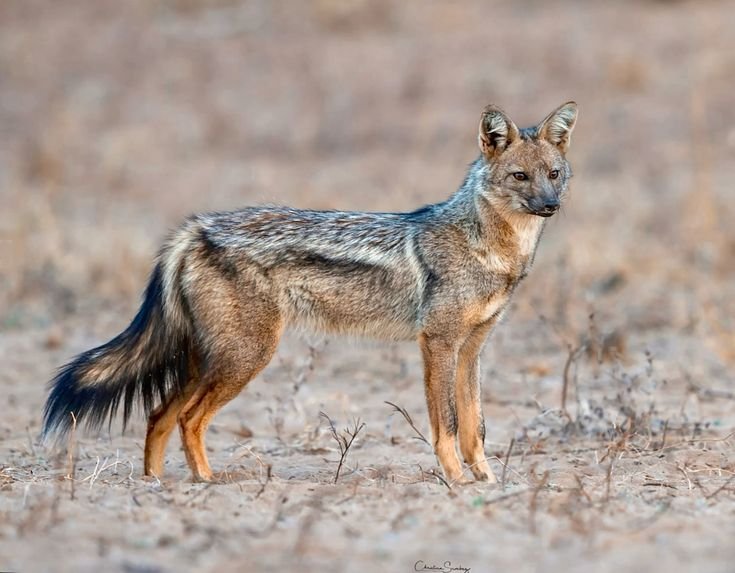
Side-striped Jackal
Lupulella adustaThe quieter cousin of the black-backed jackal.
Sightings are never guaranteed and depend on local conditions. Follow your guide and respect park rules.
Favouring woodland and savanna edges across East Africa.
Side-striped Jackal Quick Facts
What Is a Side-striped Jackal?
The side-striped jackal (Lupulella adusta) is a slender canid of the dog family (Canidae), named for the pale stripes along its flanks. It is the quiet, less conspicuous cousin of the black-backed jackal.
Preferring woodland and the edges of savanna, it moves with a softer, more secretive presence. Less vocal and less visible than its relatives, it thrives in the dappled shade where few other canids venture.
Why Does the Side-Striped Jackal Favour Woodland?
The side-striped jackal has carved out a niche the other jackals avoid — the moister woodland and savanna edges. Its darker, muted coat blends into dappled shade, and its quieter habits suit the dense cover it calls home.
More omnivorous than its cousins, it adds significant amounts of fruit and insects to its diet. This flexibility lets it thrive where prey is scarcer, making the side-striped jackal a master of the forest fringe.
What Does the Side-striped Jackal Eat?
A more omnivorous jackal, the side-striped jackal combines hunting with a heavy reliance on fruit, insects and carrion.
- Small mammals such as rodents and hares
- Insects — especially beetles and termites
- Fruit — a larger part of its diet than other jackals
- Birds, eggs and reptiles
- Carrion and scraps
How Does It Hunt?
It hunts and forages alone or in pairs, working woodland edges and thickets with quiet patience.
Where Does the Side-striped Jackal Live?
The Side-striped Jackal is found across parts of Africa, with its main populations in eastern and, where applicable, southern regions. Its preferred habitat is Woodland & savanna edges.
Eastern Africa
- Tanzania
- Uganda
- Kenya
Southern Africa
- Southern African woodlands
- South Africa
Preferred Habitat
It favours woodland & savanna edges, where cover, food and shelter are in balance. Protected national parks across East Africa help maintain stable populations.
Side-striped Jackal in Tanzania
In Tanzania, side-striped jackals are seen in woodland and along savanna edges, including parts of the Serengeti and Tarangire ecosystems.
Where Sightings May Occur
- Serengeti — woodland margins and riverine bush.
- Tarangire — acacia woodland is prime habitat.
- Other reserves — forest edges and thickets.
Where Can You See a Side-striped Jackal on Safari?
The side-striped jackal can be seen in suitable woodland habitat in Tanzania. The table below gives a realistic guide to habitat suitability.
| Destination | Habitat suitability | Sightings |
|---|---|---|
| Tarangire | Good — acacia woodland | Possible |
| Serengeti edges | Suitable margins | Possible |
| Other woodland | Varies | Possible |
Side-striped jackals are present in suitable woodland habitat, but they are secretive and largely nocturnal, so individual sightings are never guaranteed.
Want to explore Tanzania's lesser-known wildlife?
Side-striped Jackal Behavior
Quiet nature
Less vocal and more secretive than other jackals.
Pairing
Monogamous pairs share territories.
Activity
Nocturnal and crepuscular.
Omnivory
Heavy reliance on fruit and insects.
Denning
Dens in thickets and burrows.
Side-striped Jackal Family Life
Side-striped jackals form monogamous pairs. Both parents bring food to the den and care for the pups, and the young disperse to establish their own territories when mature.
Physical Adaptations
Every feature of the Side-striped Jackal is finely tuned for life in woodland & savanna edges.
- Grey-brown coat with a pale white stripe on each flank
- Black-tipped tail with a white tip
- Slender build suited to woodland
- Sharper, more fox-like face than the black-backed jackal
Vital statistics: body length approximately 65-80 cm long, weight 6-12 kg, lifespan typically around 8-10 yrs in the wild (longer in captivity).
Side-striped Jackal vs Black-backed Jackal & Golden Jackal
How does the Side-striped Jackal compare with its fellow African carnivores?
| Feature | Side-striped Jackal | Black-backed Jackal | Golden Jackal |
|---|---|---|---|
| Scientific name | Lupulella adusta | Lupulella mesomelas | Canis aureus |
| Weight | 6-12 kg | 7-12 kg | 7-15 kg |
| Size | 65-80 cm long | 70-100 cm long | 60-85 cm long |
| Habitat preference | Woodland, savanna edges | Open plains, scrub | Open country |
| Diet emphasis | Fruit, insects, small mammals | Meat, carrion | Small prey, carrion |
| Lifespan | 8-10 yrs (wild) | 10-14 yrs (wild) | 8-10 yrs (wild) |
| Diet | Omnivore (fruit-heavy) | Carnivore | Omnivore |
| Conservation | Least Concern | Least Concern | Least Concern |
Side-striped Jackal vs Other African Predators
Compare the Side-striped Jackal with Africa's other carnivores on their own species pages:
- Black-backed Jackal — compare in detail.
- Golden Jackal — compare in detail.
- Golden Jackal, Black-backed Jackal & Side-striped Jackal — the canids.
- African Wild Dog — the cooperative hunter.
- Lion, Leopard & Cheetah — the big cats.
Predators of the Side-striped Jackal
For such a side-striped jackal, the savanna holds many dangers. It is important to distinguish between predators of adults and the greater threats facing young animals.
Lions, leopards and spotted hyenas may kill adult side-striped jackals.
Pups face threats from eagles and other predators.
Conservation Status
Least Concern does not mean the species has no conservation challenges. It means the species is not currently assessed in a higher IUCN threat category at the global level.
Widespread and adaptable, the side-striped jackal is listed as Least Concern across most of its range.
Did You Know?
The pale stripe along each flank gives it its name.
It eats more fruit than any other African jackal.
It prefers woodland to open plains.
The quietest of the African jackals.
Safari Guide's Perspective
The side-striped jackal is the one you catch in peripheral vision — a grey shape at the woodland's edge. Slow down, switch off the engine, and it will often reward your patience.
Side-striped Jackal in Pictures
A closer look at the Side-striped Jackal in its natural East African habitat — its striking appearance, habitat and behaviour are best appreciated up close.
Frequently Asked Questions
No — the Side-striped Jackal is currently listed as Least Concern on the IUCN Red List, though local populations can still face habitat pressure.
A more omnivorous jackal, the side-striped jackal combines hunting with a heavy reliance on fruit, insects and carrion.
Across woodland & savanna edges in Central & Southern Africa, including parts of Tanzania.
Yes — in suitable habitat such as Serengeti & Tarangire, Tanzania, although sightings vary by species and season.
Approximately 65-80 cm long in body length and 6-12 kg in weight.
It is quick over short distances, but relies on stealth and woodland cover rather than outright speed.
Activity patterns vary by species — some are active by day, others almost entirely at night. Nocturnal and crepuscular.
Lupulella adusta — a member of the Canidae family.
Key threats include habitat loss and local habitat changes, alongside natural predation.
Monogamous pairs share territories.
References & Further Reading
- IUCN Red List: Lupulella adusta
- Animal Diversity Web (University of Michigan): Species accounts for African carnivores, including diet, size and behavior.
- Tanzania Wildlife Research Institute (TAWIRI): Monitoring wildlife populations in Tanzania.
- Estes, R. (1991). The Behavior Guide to African Mammals. University of California Press.
- Kingdon, J. (2015). The Kingdon Field Guide to African Mammals. Bloomsbury.
- About these facts: Weight, speed and lifespan are approximate adult ranges. They can vary with sex, age, season, location and the measurement method; conservation status should be checked against the current IUCN assessment.