

.png)
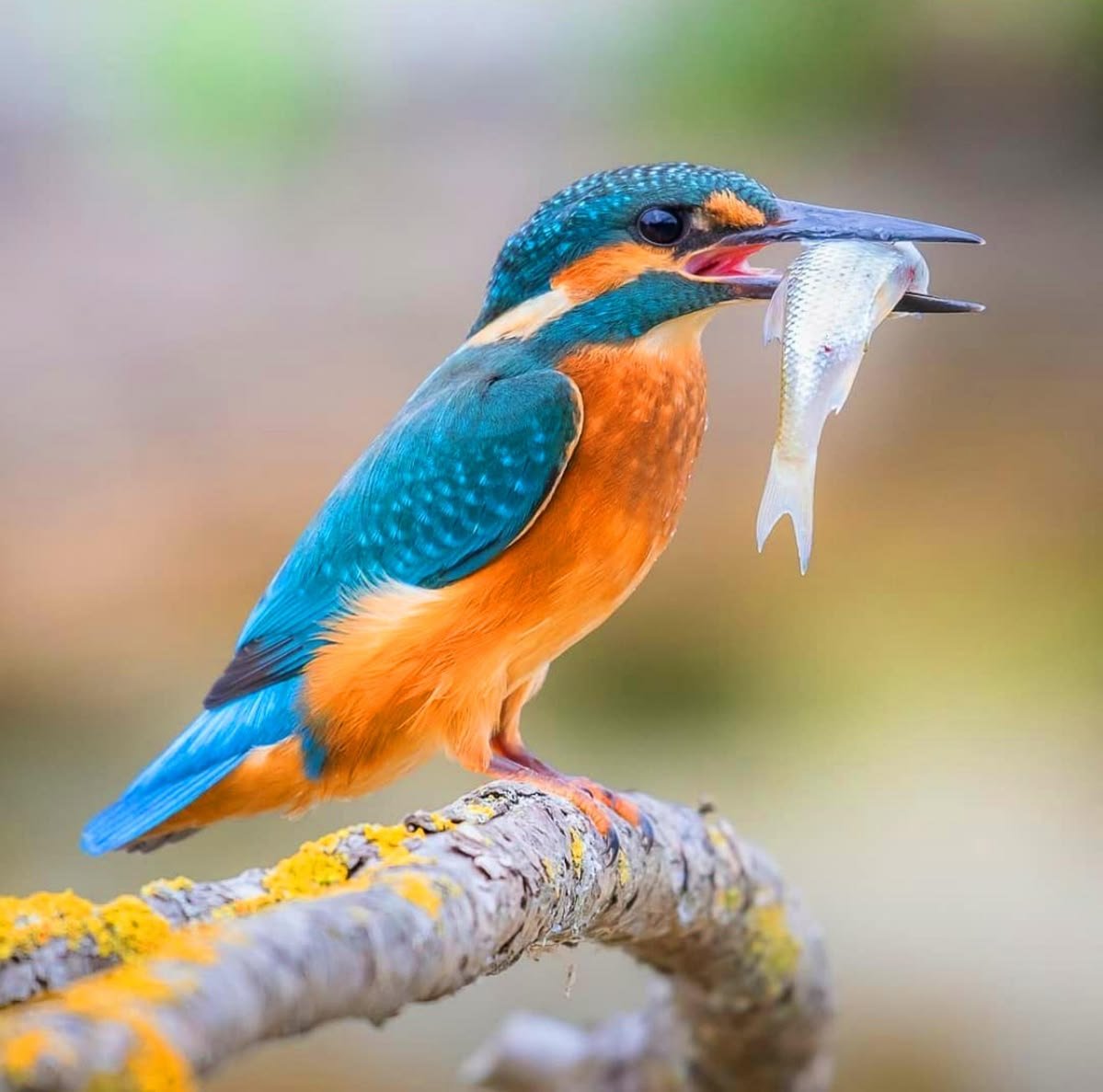
Malachite Kingfisher in Tanzania
Corythornis cristatus - the turquoise jewel of the reedsWhat Is the Malachite Kingfisher?
The Malachite Kingfisher (Corythornis cristatus) is a tiny African river kingfisher - barely 13-14 cm long - recognized by its brilliant blue upperparts, short black-and-blue crest, rufous-orange breast and cheeks, white throat patch, and vivid red bill and legs.
This is a freshwater specialist. It lives where calm, shallow water meets aquatic vegetation and low perches. From that perch it scans the surface and dives - a sharp plunge to snatch small fish and aquatic prey in front of a blurred splash.
In Tanzania it is widespread near suitable freshwater habitats - from Lake Duluti near Arusha to Tarangire & seasonal pools’s wetlands, Morogoro farmland pools and the mangrove-fringed shores near Ushongo on the coast.
Scientific Classification
Formerly placed in Alcedo cristata, the species now sits in Corythornis. Five subspecies are recognised across its sub-Saharan range, with the nominate form widespread and Galápagos? Not relevant - this is an African bird through and through.
How to Identify a Malachite Kingfisher
- Brilliant metallic blue upperparts - back, wings and tail.
- Blue and black short crest on the crown.
- Rufous-orange cheeks and rufous-orange breast and underparts.
- White throat patch contrasting the orange.
- Bright red to reddish-orange bill in adults (black in juveniles).
- Red legs.
- Compact body - approximately 13-14 cm with a short tail.
Size Summary
- Length: approximately 13-14 cm
- Weight: approximately 40-60 g (published weights vary: some sources report lower figures of 12-19 g for regional samples)
How to Identify a Malachite Kingfisher
At 13 cm this bird is most often first noticed by colour, not size:
- Tiny size + short crest + low perch right over water - the field jizz of a river kingfisher, not a hovering Pied Kingfisher.
- Blue back, orange breast, red bill/legs - no other small Tanzanian kingfisher combines all three at once.
- White throat cleanly separates the orange cheeks from the breast.
The red bill and legs alone rule out the paler-billed Pied Kingfisher at a glance, and the crest rules out kingfishers without one.
Male vs Female: Similar Roles
Males and females are similar in appearance and share breeding duties. Both sexes excavate the nest tunnel, both incubate the white eggs and both feed the altricial chicks. No bachelor groups or sex-based hierarchies exist here - the pair is the social unit.
Habitat: Calm Water + Vegetation + Low Perch
Three ingredients define Malachite Kingfisher habitat wherever you meet it:
- Calm, shallow freshwater: lakes, ponds, slow-moving rivers and streams, seasonal pools, marshes and reedbeds.
- Aquatic vegetation: reeds, papyrus, mangrove edges, sheltered freshwater shores and vegetated water margins - including irrigation canals and farm dams.
- Low perch: 20-50 cm above the water is ideal; scattered vegetation with high fish density.
The species avoids fast-flowing rivers and saline waters and relies on clear, non-turbid conditions. It occurs from sea level to about 3,000 m, but is commonest below 2,000 m. Its core ecological formula is: still water + vegetation + low perch + small aquatic prey.
Habitat and Global Distribution
The Malachite Kingfisher is widely distributed across sub-Saharan Africa - a resident of freshwater and wetland habitats from Senegal and Ethiopia south to South Africa.
Tanzania is one part of its broad African range. It is common wherever calm, vegetated freshwater exists.
Malachite Kingfisher in Tanzania
Tanzania Birds documents the species throughout Tanzania wherever lakes, ponds, seasonal pools and surrounding vegetation meet.
Verified Tanzanian examples include:
- Lake Duluti - the forested crater lake near Arusha, photographed for this species.
- Tarangire & seasonal pools National Park - marsh and riverine perches.
- Morogoro / Mbuyuni Farm - farm-pool occurrence near the Uluguru foothills.
- Coastal wetlands near Ushongo (north of Pangani) - mangrove-fringed shores.
No invented population estimates are offered - occurrence, not abundance, is the documented fact.
Where to See Malachite Kingfishers in Tanzania
Lake Duluti
Country: Tanzania | Region: Arusha
A forested crater lake minutes from Arusha town - strong evidence and available imagery make this the flagship site for the species near the northern circuit.
Good opportunity beside suitable water with aquatic vegetation and low perches.
Tarangire & seasonal pools National Park
Country: Tanzania | Region: Northern Tanzania
Reedbed margins and river pools hold territorial pairs throughout the year.
Good opportunity beside suitable water with aquatic vegetation and low perches.
Lake Manyara & coastal wetlands National Park
Country: Tanzania | Region: Northern Tanzania
Groundwater-forest streams, hot-spring channels and lake margins provide classic perch-and-dive habitat.
Good opportunity beside suitable water with aquatic vegetation and low perches.
Ushongo Coastal Wetlands
Country: Tanzania | Region: Coast
Mangrove edges and sheltered tidal creeks near Ushongo/Pangani - a coastal stronghold where freshwater meets the sea.
Good opportunity beside suitable water with aquatic vegetation and low perches.
Safari & Birding Methods
- Specialist birdwatching - the primary method; listen for the sharp "pip" call.
- Game drives with frequent waterside stops.
- Wetland birding along reedbed boardwalks.
- Guided walks where permitted - Duluti forest trails are ideal.
- Shoreline and lake observation where officially permitted.
- Wildlife photography with a long lens from a low hide.
Best Time to See Them
Malachite Kingfishers can be seen year-round where suitable freshwater habitat remains available. Local activity tracks water level, prey, vegetation, breeding and weather rather than any generic dry-season calendar.
Malachite Kingfisher in Pictures
A closer look at the Malachite Kingfisher in its natural East African habitat — its striking appearance, habitat and behaviour are best appreciated up close.
Where to Spot the Malachite Kingfisher on Safari
Plan your trip around the destinations and safaris where the Malachite Kingfisher is easiest to see. Explore the parks, itineraries and tour packages by destination below.
What Does the Malachite Kingfisher Eat?
Primarily small fish, but opportunistically taking whatever small aquatic prey the perch reveals:
- Small fish - the core prey, usually 2-5 cm.
- Aquatic insects - dragonflies, damselflies and their larvae.
- Tadpoles and frogs.
- Shrimps, prawns and crabs.
- Lizards snatched near the water’s edge and terrestrial insects taken in short sallies.
Fish dominate where water is clear and prey is abundant, but the bird switches readily to insects and amphibians when fish are scarce.
How Does the Malachite Kingfisher Hunt?
- Sits on a low perch - 20-50 cm over water, often on a reed or twig.
- Scans the water with its dagger bill angled down, bobbing the head and flicking the tail.
- Detects prey close to the surface.
- Dives sharply - a rapid plunge, low and fast over the water.
- Catches prey close to the surface and returns to the perch.
- Beats or stuns larger prey against the branch where necessary.
- Swallows fish head-first.
The bird has regular stands from which it fishes; an undisturbed bird will return to the same twig after every dive, giving a patient observer repeated chances.
How Does It See Prey in Water?
The Malachite Kingfisher relies on precise visual targeting. From its low perch it fixes on prey and adjusts its dive to the apparent position of the fish beneath the water surface, compensating for refraction.
No exact correction-factor numbers are quoted here - the observed fact is simply that the strike, once launched, is remarkably accurate, and misses are quickly followed by a second attempt from the same perch.
Daily Behavior and Territoriality
Malachite Kingfishers are primarily diurnal. They spend substantial time perching, hunting, defending territory, preening and, during breeding, feeding young and maintaining the nest area. Adults are often alone or in breeding pairs; pairs defend feeding and nesting territories with threat displays and aerial chases. Multiple individuals can occur near rich freshwater without forming large permanent flocks. Largely resident, the species makes only local movements as water levels change; juveniles disperse more widely than adults.
Breeding, Burrow Nests, Eggs and Chicks
Malachite Kingfishers are territorial, monogamous breeders. Both sexes excavate the nest tunnel itself - a shared labour.
- Nest site: a burrow in a steep earth bank, river or lake margin, muddy embankment, earth mound or soil around tree roots - including road cuttings. Burrows are often inclined upward before the chamber.
- Tunnel length: approximately 30-90 cm in published descriptions (broader sources report 25 cm to 1.2 m); terminal chamber roughly 9-10 cm wide, unlined and littered with fish bones and regurgitated pellets.
- Eggs: white and glossy, rounded; a detailed breeding study documented 2-4 eggs, while broader regional sources report 3-6. Eggs are laid one day apart.
- Incubation: approximately 14-16 days, shared by both sexes (female often broods at night, male feeds her).
- Chicks: altricial, naked and blind at hatching. Eyes open around day 9-12; young fledge at about 22-25 days. Both parents feed the brood, provisioning at the burrow entrance. Chicks can fish within a week of fledging and become independent around day 36-41, when adults chase them from the territory.
- Broods: several broods can be raised sequentially where fish density remains high.
Pairs often dig two or three burrows but complete only one - laying coincides with low water when banks are exposed and tunnel flooding risk is low.
Where Does a Malachite Kingfisher Nest?
The burrow is excavated into a vertical earthen bank or cliff near freshwater - rivers, streams, ponds and even seasonal marshes that retain a bank through the breeding period. Sites 1-1.5 m above water level are favoured to minimise flooding, with the chamber ending in a small, unlined hollow. The nest chamber may accumulate fish scales, bones and arthropod remains as the brood grows - a useful field sign for an active burrow.
Tunnels in road cuttings and soil around fallen-tree roots show how adaptable the species is: so long as the soil is soft, sandy and near perches for foraging, a colony of one will try its luck.
Conservation Status: Least Concern
IUCN Red List Status: Least Concern. The species has a very broad range across sub-Saharan Africa, a large and stable global population, and occurs in many protected freshwater systems.
Local populations still depend on three non-negotiables:
- Clean water with small-fish populations intact.
- Intact aquatic vegetation providing perches and cover.
- Suitable nesting banks - undisturbed earth banks with soft, sandy soil.
Where these degrade - through wetland degradation, nesting-bank destruction, pollution, pesticide runoff, reduced fish prey or persecution by people who regard kingfishers as fishery competitors - local numbers can fall. The species also serves as a useful bio-indicator of freshwater health: where Malachite Kingfishers thrive, the water is usually in good condition. No generic TAWIRI monitoring claim is made; conservation here is freshwater stewardship, not a single-species programme.
Nest Threats
- Snakes and monitor lizards at the burrow entrance.
- Flooding and bank collapse after heavy rains.
- Disturbance too close to active burrows.
Malachite Kingfisher Facts
Malachite Kingfisher vs African Pygmy Kingfisher
| Feature | Malachite Kingfisher | African Pygmy Kingfisher |
|---|---|---|
| Size | 13-14 cm; 40-60 g | Even smaller (~12 cm) and slimmer |
| Plumage | Blue upperparts, rufous breast, white throat, red bill | Rufous overall with violet wash; less contrasting blue |
| Bill | Reddish-orange | Orange-red with more violet on cheeks |
| Habitat | Strictly waterside - reeds, ponds, slow rivers | Less water-bound - more woodland interior |
| Hunting | Perch-and-dive for fish | More insect-hawking away from water |
| Tanzania | Widespread at freshwater sites countrywide | Scarcer and more habitat-restricted |
Malachite Kingfisher vs Pied Kingfisher
| Feature | Malachite Kingfisher | Pied Kingfisher |
|---|---|---|
| Size | 13-14 cm, tiny and compact | Larger (~25 cm), pied black-and-white |
| Bill | Reddish-orange | Long, black, dagger-like |
| Hunting technique | Perch-and-dive from low reeds | Famous hovering-flight plunge dives; also perches |
| Habitat overlap | Both use Tanzanian freshwater - but Pied hovers over open water, Malachite stays tucked in vegetated margins | |
Malachite Kingfisher vs Grey Heron
| Feature | Malachite Kingfisher | Grey Heron |
|---|---|---|
| Family | Alcedinidae (tiny river kingfisher) | Ardeidae (large wader) |
| Size | 13-14 cm; ~50 g | 84-102 cm; 1-2 kg |
| Perch strategy | 20-50 cm above water on reeds | Standing in water itself |
| Prey | Very small fish (2-5 cm), insects, tadpoles | Fish-dominated but takes mammals, birds, reptiles |
| Shared waters | Lake Manyara & coastal wetlands margins and Tarangire & seasonal pools river pools host both - the heron towering above, the kingfisher tucked below | |
Why Birdwatchers Love the Malachite Kingfisher
- Tiny jewel: one of Africa’s smallest and most vividly coloured waterbirds - a living gemstone on a reed.
- Vivid colours: electric blue, rufous orange and red bill in one compact package.
- Plunge diving: the whole hunt - perch, scan, dive, return - plays out in seconds within a single field of view.
- Perch hunting patience: unlike hovering kingfishers, its strategy is readable: watch it choose its perch and you know exactly where to wait.
- Freshwater indicator: where Malachites thrive, the water system is usually healthy - finding one is reassurance for the whole wetland.
Photographing the Malachite Kingfisher
- Low-perch profile - blue upperparts and orange breast framed against green reeds.
- Rufous breast and white throat in side-light.
- The plunge dive itself - burst-mode from a pre-focused perch.
- Prey capture - a silver fish held crosswise in the red bill.
- Fish being handled on the perch - beating and turning head-first.
- Pair at the burrow entrance (from a respectful distance) or a juvenile on its first perch.
Because it is very small, use a long lens and patience. Approach slowly, keep low, pre-focus on its favourite perch and wait. Never approach active nesting banks - disturbance collapses tunnels and abandons broods.
Frequently Asked Questions
A tiny river kingfisher (Corythornis cristatus) - only about 13-14 cm long - with brilliant metallic blue upperparts, a short black-and-blue crest, rufous-orange breast and cheeks, a white throat and a bright red bill. It is one of sub-Saharan Africa's most colourful freshwater birds.
Documented sites include Lake Duluti near Arusha, Tarangire & seasonal pools National Park's marshes and rivers, seasonal pools around Morogoro/Mbuyuni Farm, Lake Manyara & coastal wetlands's groundwater streams and coastal wetlands near Ushongo. More broadly, any suitable freshwater site in Tanzania can hold the species.
Primarily small fish - typically 2-5 cm - plus aquatic insects, dragonflies and their larvae, tadpoles, frogs, shrimps, prawns, crabs, lizards and terrestrial insects taken near water. It beats larger prey on its perch and swallows fish head-first.
From a low perch 20-50 cm over water it scans the surface, dives sharply in a low, fast plunge, snatches prey just below the surface, returns to the perch, beats or stuns it if needed and swallows. Regular fishing stands are reused after every dive.
The low perch gives a clear, short-range view of prey. A near-vertical plunge from such a low height minimises the distance through water and maximises accuracy - unlike hovering kingfishers that dive from height, the Malachite relies on precision from close range.
It is generally territorial and pair-based, with adults alone or in breeding pairs defending feeding and nesting territories. Multiple birds can occur near rich freshwater without forming large permanent flocks.
In a burrow excavated into a steep earth bank, river or lake margin, muddy embankment or soil around tree roots - including road cuttings. Burrows may be dug 2-3 at a time, but only one is completed. Both sexes excavate together.
Published descriptions give approximately 30-90 cm for this species; broader regional sources report 25 cm to 1.2 m, ending in a small chamber about 9-10 cm wide that is littered with fish bones and regurgitated pellets.
A detailed breeding study documented 2-4 white, glossy eggs; broader regional sources report 3-6. Eggs are laid one day apart onto the fish-bone litter in the terminal chamber. If conditions allow, several clutches can be raised sequentially.
Approximately 14-16 days, shared by both sexes - with the female often brooding at night while the male provision-feeds her.
In a detailed Kinshasa study the nestling period lasted approximately 16-17 days, with broader sources recording fledging at 22-25 days. Chicks can fish within about a week of fledging and become fully independent around day 36-41.
It is largely resident across much of its range, but local movements occur as water levels, food and habitat conditions change. Juveniles disperse more widely than adults.
No. The species is assessed as Least Concern on the IUCN Red List. It has a very broad range, a large and stable population and occurs in many protected freshwater systems, though local numbers depend on clean water and intact banks.
Year-round where suitable freshwater habitat persists. Activity tracks water level, prey and breeding rather than any generic calendar - early mornings on a favourite perch offer the best photographic light.
The Malachite is larger (13-14 cm), with a red bill, blue upperparts and a waterside perch-and-dive habit. The African Pygmy Kingfisher (~12 cm) is overall more rufous with a violet wash, less water-bound and more of a woodland insect-hawker. Of the two, only the Malachite is a true freshwater fishing specialist.
Related Safari Packages & Tours
Book a safari to see the Malachite Kingfisher and the rest of Africa's incredible wildlife with our expert guides.
References & Further Reading
- BirdLife DataZone / IUCN: Corythornis cristatus factsheet - Least Concern.
- Animal Diversity Web / ornithological references: Corythornis cristatus - taxonomy, measurements, breeding data.
- Peer-reviewed Malachite Kingfisher breeding studies (Kinshasa): burrow and nestling data (2-4 eggs, 14-16 d incubation, 16-17 d nestling).
- Tanzania Birds: Lake Duluti, Tarangire & seasonal pools, Morogoro and Ushongo occurrence records.
- About these facts: measurements and timings are approximate ranges drawn from available sources; they vary with sex, age, region and method.
Sightings are never guaranteed and depend on local conditions.

Communication and Calls
Malachite Kingfishers communicate vocally: contact calls between mates, sharp territorial calls and breeding-related vocalizations around the nest burrow. Visual threat displays - crest raising, bill gaping and short chase flights - punctuate these calls. There is no scent communication in this species; voice and posture do the work.