

.png)
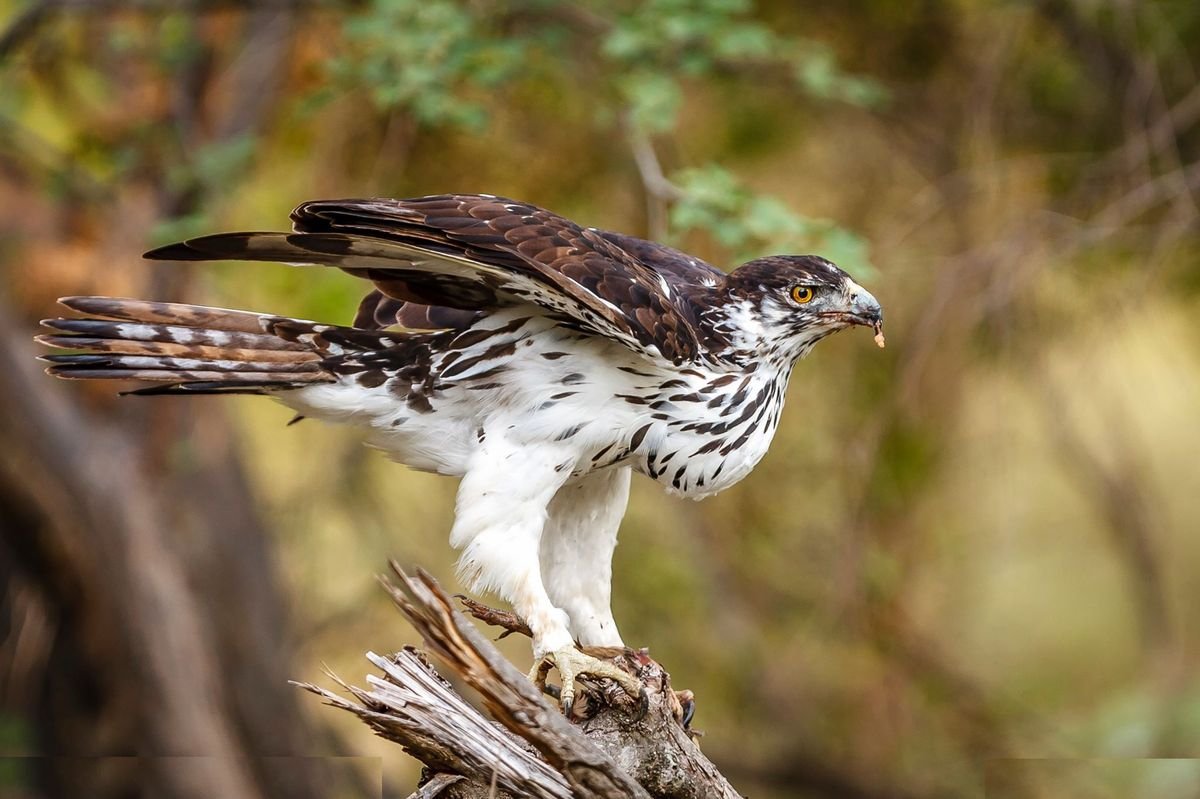
African Hawk Eagle
Aquila spilogaster - the bold black-and-white woodland hunterIntroduction to the African Hawk-Eagle
The African Hawk-Eagle (Aquila spilogaster) is a medium-sized African eagle of dry woodland, savanna woodland and wooded hills across sub-Saharan Africa. Boldly patterned in black and white with a heavily barred chest, it hunts from perches and on the wing - taking francolins and other birds, hyraxes, small mammals and reptiles.
Secretive and quick, it is one of the trickier Tanzanian raptors to tick off - which makes a confirmed sighting especially satisfying for birdwatchers. Watch for a pair perched side by side on an exposed dead branch, or a fast, low flight through the trees flushing prey ahead of it.
Scientific Classification
Formerly treated as a subspecies of Bonelli's Eagle (Aquila fasciata), the African Hawk-Eagle is now classified as a full species based on genetic distance; the two form a superspecies. The scientific name spilogaster comes from the Greek for 'spotted belly'.
Physical Characteristics
- Black upperparts: dark back, black flight feathers and black tail with a broad black trailing edge.
- White throat and foreneck with bold black stripes across the upper breast, underwing coverts and flanks; lower belly white.
- Head: black crown and ear coverts; deep yellow eyes; hooked black bill with a yellowish cere.
- Feathered legs (white) down to long greenish-yellow bare feet with strong talons.
- Length approximately 55-65 cm; wingspan roughly 130-160 cm.
- Weight: males about 1.15-1.4 kg; females about 1.4-1.75 kg - females also show heavier underpart streaking.
- Juveniles look completely different: dark brown above with pale rufous-and-white bars, rufous underparts streaked brown, brown eyes and a paler cere - taking years to mature into adult plumage.
Male vs Female: Key Differences
Males and females are broadly similar in plumage. The main differences:
| Characteristic | Male | Female |
|---|---|---|
| Size & weight | About 1.15-1.4 kg | Larger - about 1.4-1.75 kg |
| Underparts | Less heavily streaked | More heavily streaked |
| Breeding role | Shares incubation shifts, nests and territory defence | Shares incubation, nesting and chick care |
Both adults participate fully in territorial defence and raising young.
African Hawk-Eagle Nesting and Breeding
- Monogamous territorial pairs: displays consist of soaring together and calling over the woodland territory.
- Large stick nest: bowl-shaped, around one metre across, placed in the fork of a tall tree - typically along wooded river banks or on hill slopes.
- Flexible nesters: nests have occasionally been recorded on electricity pylons and cliff faces, and the species sometimes takes over old nests of other birds.
- Nests reused: substantial stick structures are maintained across breeding attempts.
Habitat: Where They Thrive
The African Hawk-Eagle is a bird of dry country woodlands:
- Dry woodland and savanna woodland - the core habitat across its range.
- Wooded hills and rocky cliffs - used for nesting and hunting vantage.
- Woodland edges and wooded streams/riparian strips - favoured nest sites along tree-lined watercourses.
It avoids dense equatorial lowland forest and the most arid south-western regions, occurring mainly from sea level to about 1,500 m (occasionally up to 3,000 m). Mature trees for nesting and hunting perches are the key habitat requirement - not water itself.
Distribution Map
The African Hawk-Eagle is widely distributed across sub-Saharan Africa - from Senegal and Gambia in the west, east through Ethiopia and Somalia, and south to north-eastern South Africa. Adults are sedentary residents, though they may move locally in response to drought.
Present across suitable dry-woodland belt of sub-Saharan Africa.
African Hawk-Eagle in Tanzania
Tanzania sits squarely within the species' broad sub-Saharan range, and its extensive dry woodlands, savanna woodland and wooded hills provide suitable habitat. Birdwatchers most often encounter it in the northern circuit parks' riverine woodland and acacia country - Lake Manyara and Tarangire in particular - while it can occur in any comparable woodland habitat across the country. It is a secretive, easily-overlooked raptor even where present, so encounters require patience and sharp eyes rather than guaranteed conditions.
Where to See African Hawk-Eagles in Tanzania
Suitable, frequently visited woodland habitats:
Lake Manyara National Park
Region: Northern Tanzania
Groundwater forest edges and acacia woodland give this perch-hunting eagle ideal cover.
Possible in suitable habitat; sightings are never guaranteed.
Tarangire National Park
Region: Northern Tanzania
Riverine woodland, baobab-dotted hills and open savanna woodland suit its hunting style.
Possible in suitable habitat; sightings are never guaranteed.
Best Time to Look
The species can be encountered year-round where suitable habitat exists. Dry-season safari conditions may improve general visibility and access, but there is no single universal best period for this particular eagle.
Safari Types
Game drives, dedicated birdwatching safaris and wildlife photography all work well; guided birding walks add a ground-level perspective where the destination permits them.
African Hawk Eagle in Pictures
A closer look at the African Hawk Eagle in its natural East African habitat — its striking appearance, habitat and behaviour are best appreciated up close.
Where to Spot the African Hawk Eagle on Safari
Plan your trip around the destinations and safaris where the African Hawk Eagle is easiest to see. Explore the parks, itineraries and tour packages by destination below.
Diet: Birds, Mammals and Reptiles
The African Hawk-Eagle is a versatile woodland predator with a broad menu - it is not a fish specialist:
- Birds: francolins, guineafowl, hornbills and other gamebirds and medium birds are core prey.
- Mammals: hares, dikdiks, squirrels, monkeys and mongooses.
- Reptiles: lizards and snakes where available.
- Occasionally insects and other suitable prey; individual prey items may weigh up to around 4 kg.
Its varied palate reflects its varied woodland home - from ground gamebirds to tree-dwelling mammals.
Daily Behaviour & Social Life
Diurnal Rhythm
The African Hawk-Eagle is diurnal. It spends considerable time perched and scanning its woodland habitat; hunting activity varies with prey availability, weather and local conditions rather than any fixed timetable.
Social Structure
- Usually solitary outside breeding contexts - a secretive raptor often missed even by keen observers.
- Territorial pairs: breeding pairs defend nesting and hunting territories year-round, sometimes seen perched together.
- Dispersal: juveniles and non-breeding birds disperse away from adult territories.
Voice and Communication
The African Hawk-Eagle is far less demonstrative than the fish eagle, but it does call - most often near the nest or during territorial display:
- Whistling series often rendered as a repeated "kluu-kluu-kluu".
- An explosive "kwee-oo" that fades away.
- Soaring display: calling accompanies paired soaring flights over the territory.
- Generally silent while flying between hunting areas.
Eggs, Incubation and Fledging
- Eggs: usually one or two are laid.
- Incubation: approximately 43-44 days, shared by both parents.
- Siblicide: if two chicks hatch, only the strongest is normally reared - the older chick outcompetes its sibling.
- Fledging: the young eagle leaves the nest after around 73 days and becomes fully independent roughly three months later.
Lifespan: no robust wild-lifespan figure is published for this species; like similar-sized eagles it is a multi-year resident of its territory once mature.
Conservation Status
IUCN Red List Status: Least Concern (BirdLife International). The species remains widespread, but its population is thought to be declining as woodland habitat is destroyed - though not yet at the rate required for a threatened category.
Pressures That Matter Locally
- Woodland loss: clearing of mature trees removes nesting sites and hunting cover.
- Habitat fragmentation: isolates pairs and reduces connected woodland.
- Persecution: sometimes shot by farmers because it occasionally takes domestic chickens and other fowl.
- Accidental mortality: individuals have been found drowned in farm reservoirs.
- Prey availability: depends on healthy populations of birds, mammals and reptiles in intact woodland.
The species has become scarce to rare outside protected areas across parts of Africa - making Tanzania's protected parks important refuges.
African Hawk-Eagle Fact Sheet
African Hawk-Eagle vs Similar Raptors
African Hawk-Eagle vs African Fish Eagle
| Feature | African Hawk-Eagle | African Fish Eagle |
|---|---|---|
| Scientific name | Aquila spilogaster | Haliaeetus vocifer |
| Length | 55-65 cm | 63-77 cm |
| Wingspan | 130-160 cm | 175-210 cm |
| Plumage | Black above, white with bold black bars below | White head/breast, chestnut body, black wings |
| Habitat | Dry woodland, wooded hills | Freshwater lakes, rivers, wetlands |
| Diet | Birds, small mammals, reptiles | Primarily fish |
| Status | Least Concern | Least Concern |
African Hawk-Eagle vs Osprey
| Feature | African Hawk-Eagle | Osprey |
|---|---|---|
| Scientific name | Aquila spilogaster | Pandion haliaetus |
| Family | Accipitridae | Pandionidae |
| Length | 55-65 cm | About 52-60 cm |
| Wingspan | 130-160 cm | Roughly 150-180 cm |
| Plumage | Black-and-white barred; dark crown | White below with dark eye-stripe, brown above |
| Diet | Birds, mammals, reptiles of woodland | Almost exclusively live fish |
| Status | Least Concern | Least Concern |
Why Birdwatchers Value the African Hawk-Eagle
This is a birder's eagle. Its secretive nature, fast woodland flight and similarity to other Aquila species make identification genuinely challenging - nailing a good view of an adult's bold black-and-white barring, or picking out a streaky juvenile, is a real field-craft achievement. Add dramatic perch-hunting behavior, the chance of watching a pair soar together over wooded hills, and striking photographic subjects on dead-snag perches, and the species becomes a prized target on any Tanzania birdwatching itinerary.
Photographing the African Hawk-Eagle
Subjects worth working for:
- Perched adults on exposed dead branches - the classic field view.
- Takeoff and hunting flight - fast, deep wingbeats through the trees.
- Pair interaction - two birds side by side, or soaring display flights together.
- Prey capture - rarely witnessed, highly rewarding.
- Juvenile plumage - a completely different-looking bird worth documenting.
- Nest views from responsible distance only - never disturb active nests.
Ethics first: keep legal distances, do not playback calls near nests, follow your guide's and the park's instructions at all times.
A medium-sized African eagle (Aquila spilogaster) of the Accipitridae family, inhabiting dry woodland, savanna woodland and wooded hills across sub-Saharan Africa. Adults are boldly patterned black above and white below with heavy dark barring; they hunt birds, small mammals and reptiles from perches or in fast pursuit flights. Formerly considered a subspecies of Bonelli's Eagle, it is now a full species.
Across sub-Saharan Africa in dry woodland, savanna woodland, wooded hills and along wooded streams - from Senegal and Gambia east to Ethiopia and Somalia, south to north-eastern South Africa. Mainly sea level to about 1,500 m. Adults are sedentary residents.
Yes - Tanzania's dry woodlands fall within its natural range. Lake Manyara and Tarangire national parks offer suitable habitat, though the species is secretive and easily overlooked. Possible in suitable habitat; sightings are never guaranteed.
Mainly birds - francolins, guineafowl, hornbills and other gamebirds - plus mammals such as hares, dikdiks, squirrels and mongooses, and reptiles. Individual prey can weigh up to around 4 kg. It occasionally takes insects too.
No. Unlike the African Fish Eagle - which shares some Tanzanian parks - the hawk-eagle is a woodland hunter with no specialisation in aquatic prey. Its diet is terrestrial and arboreal: birds, mammals and reptiles.
Several strategies: long perch-watches scanning for movement; fast flights through the canopy flushing prey into the open; high soaring followed by a stoop; patient waiting above waterholes for drinking birds; and occasionally cooperative hunting by pairs - one flushing prey toward the partner making the kill.
No - it is usually solitary outside breeding contexts, or seen in territorial pairs. Pairs defend nesting and hunting territories year-round. Juveniles and non-breeding birds disperse away from adult territories.
In a large stick nest - bowl-shaped and around a metre across - built in the fork of a tall tree, typically along wooded river banks or on hill slopes. Nests have occasionally been found on pylons and cliffs, and old nests of other birds are sometimes taken over.
Usually one or two. Both parents share incubation, which lasts about 43-44 days. If two chicks hatch, siblicide normally means only the stronger one survives. The young fledge at around 73 days old.
No - it is listed as Least Concern by BirdLife International and remains widespread. However, the population is thought to be declining due to woodland destruction, and the species faces local pressures including persecution and loss of mature nesting trees.
The species can be encountered year-round where suitable habitat exists. Dry-season safari conditions may improve general visibility and access, but there is no single universal best season specifically for this eagle.
Focus on perched adults on exposed dead branches, takeoff sequences, pair interaction and soaring displays. Juveniles in streaky brown plumage make distinctive subjects. Keep legal distances, never approach active nests, and follow your guide's instructions.
Related Safari Packages & Tours
Book a safari to see the African Hawk Eagle and the rest of Africa's incredible wildlife with our expert guides.
References & Further Reading
- IUCN Red List / BirdLife DataZone: Aquila spilogaster factsheet
- The Peregrine Fund: African Hawk-eagle species profile - measurements, diet and breeding biology.
- eBird / Clements taxonomy: Aquila spilogaster (Bonaparte, 1850), monotypic.
- About these facts: Measurements and breeding figures are approximate ranges drawn from the sources above; they can vary with sex, age, region and method. Conservation status should be checked against the current IUCN assessment.